India’s solar energy sector has grown rapidly, creating a wide range of companies involved in solar manufacturing, engineering, project development, installation and maintenance. As a result, the term solar company in India can refer to businesses with very different roles within the solar value chain.
Some solar companies manufacture solar modules, while others focus on engineering and construction, rooftop installation, project development or operations and maintenance. There are also integrated solar companies that combine multiple capabilities under one organization.
Understanding these differences can help homeowners, businesses and industries identify the type of solar company they need for their project.
What Is a Solar Company?
A solar company is a business involved in one or more parts of the solar energy value chain. Depending on its capabilities, a solar energy company may manufacture solar modules, design solar power systems, supply equipment, install solar plants, execute EPC projects or provide long-term maintenance services.
In India, solar companies commonly work across four major areas:
- Solar manufacturing
- Solar engineering and EPC
- Solar installation
- Solar operations and maintenance
Some companies specialize in one area, while integrated solar companies provide several of these services together.
What Does a Solar Company in India Do?
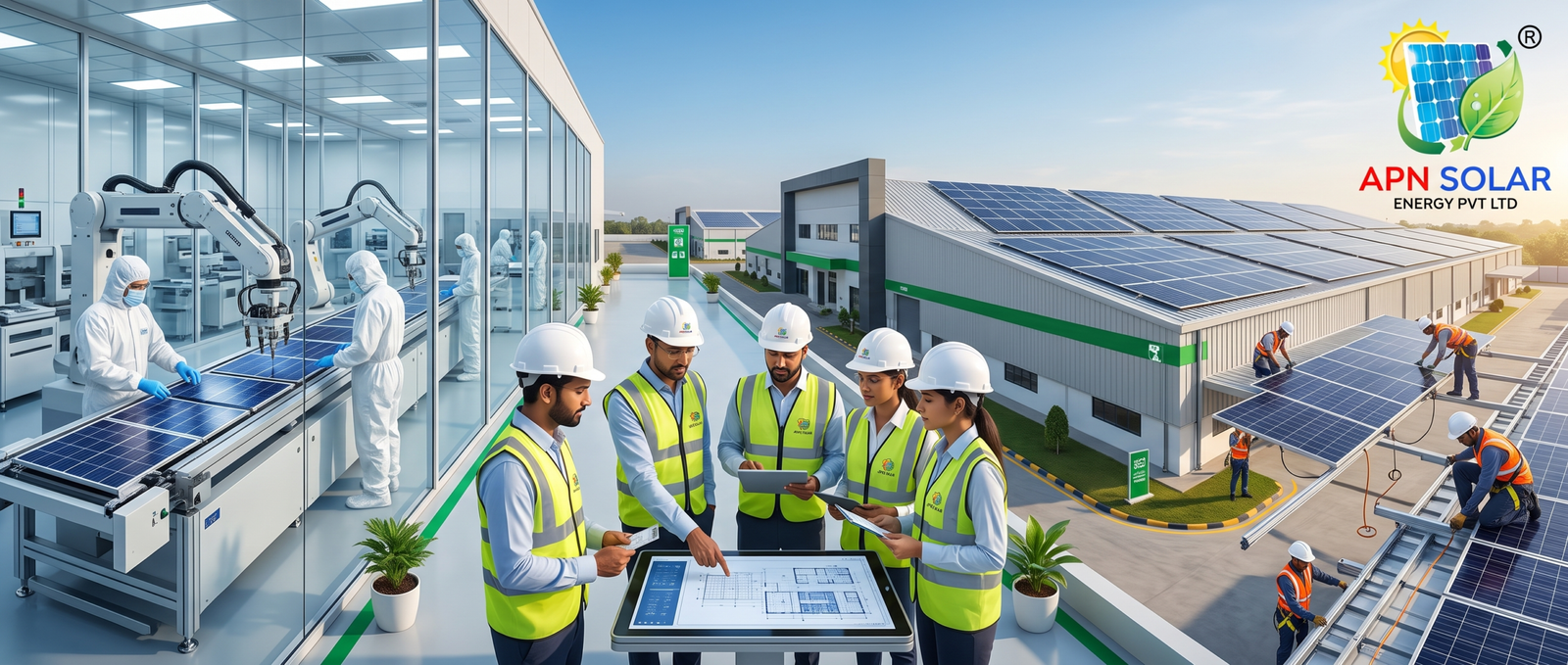
The services provided by a solar company depend on its business model and technical capabilities. A full-service solar company may be involved from the initial project assessment through installation and ongoing maintenance.
Solar Panel Manufacturing
Solar manufacturers produce solar modules and other components used in photovoltaic systems.
Manufacturing capabilities can include module assembly, quality testing, electrical testing and compliance with applicable standards and requirements.
When evaluating a solar manufacturer, customers can look at factors such as:
- Manufacturing capability
- Module technology
- Product certifications
- Quality-control processes
- Applicable regulatory compliance
- Warranty terms
- Product availability
Solar Engineering and System Design
Engineering is an important part of a solar project. It involves assessing the site, electricity requirements, available space, system configuration and other technical factors before installation.
Depending on the project, engineering work can include:
- Site assessment
- Solar potential analysis
- System sizing
- Electrical design
- Structural design
- Equipment selection
- Layout planning
- Energy-generation estimates
Solar EPC
EPC stands for Engineering, Procurement and Construction.
A solar EPC company can manage the different stages involved in executing a solar project, from engineering and equipment procurement to construction, installation and commissioning.
For larger residential, commercial and industrial projects, EPC capabilities can be important because multiple technical and execution activities need to be coordinated.
Solar Installation
Solar installation companies install photovoltaic systems at residential, commercial, industrial and other project sites.
Installation work may include:
- Mounting-structure installation
- Solar module installation
- Inverter installation
- DC and AC electrical work
- Cabling
- Earthing
- Safety systems
- System testing
- Commissioning
Solar Operations and Maintenance
Solar projects require monitoring and maintenance after installation.
Solar O&M services can include:
- System monitoring
- Preventive maintenance
- Electrical inspections
- Module cleaning
- Fault identification
- Performance checks
- Equipment maintenance
- Corrective repairs
The exact scope depends on the size and type of solar installation.
Types of Solar Companies in India
Not every solar company performs the same role. Understanding the different types can make it easier to compare companies for a specific requirement.
-
Solar Panel Manufacturers
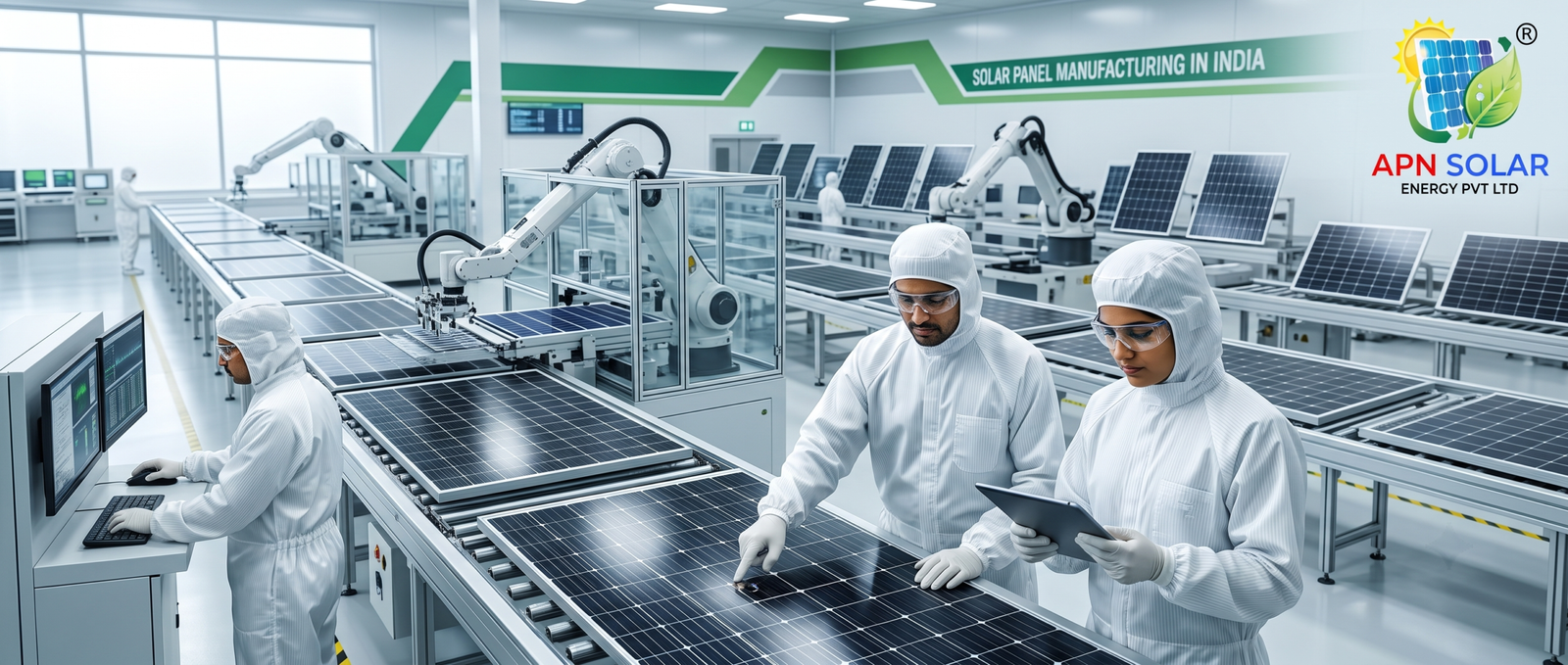
Solar panel manufacturers produce photovoltaic modules used in solar power systems.
Their role is primarily focused on manufacturing and quality control rather than project installation.
Customers looking for solar modules may evaluate manufacturers based on their technology, certifications, manufacturing capabilities, product specifications and applicable compliance requirements.
-
Solar EPC Companies
Solar EPC companies focus on project execution.
They may handle engineering, equipment procurement, construction, installation, commissioning and related project-management activities.
EPC companies can work on residential, commercial, industrial and utility-scale projects depending on their capabilities.
-
Solar Panel Installation Companies
Solar panel installation companies primarily focus on installing solar systems at customer locations.
For residential projects, this may involve rooftop assessment, system installation, electrical connections and commissioning.
For larger projects, installation may form one part of a broader EPC contract.
-
Solar Project Developers
Solar project developers are involved in developing and managing solar power projects.
Their responsibilities can include project planning, site development, financing coordination, approvals, construction coordination and project operations.
Project developers are more commonly associated with larger commercial, industrial or utility-scale projects.
-
Integrated Solar Companies
An integrated solar company combines multiple capabilities within the solar value chain.
For example, a company may have manufacturing capabilities while also providing engineering, EPC, installation and O&M services.
This type of business model can allow customers to work with one organization across multiple stages of a solar project.
What Is the Difference Between a Solar Manufacturer, Installer and EPC Company?
The terms manufacturer, installer and EPC company are sometimes used interchangeably, but they describe different roles.
| Type of company | Primary role |
| Solar manufacturer | Manufactures solar modules or other solar components |
| Solar installer | Installs solar systems at customer sites |
| Solar EPC company | Handles engineering, procurement and construction of solar projects |
| Solar project developer | Develops and manages solar projects |
| Integrated solar company | Combines multiple solar capabilities |
A company can operate in more than one category. For example, an integrated solar company may have manufacturing capabilities while also executing EPC and installation projects.
How to Choose a Solar Company in India
Choosing a solar company should depend on the type, size and requirements of the project.
Before selecting a company, customers can consider several factors.
-
Manufacturing Capability
If a company manufactures solar modules, check its manufacturing capabilities, product specifications, applicable certifications and quality-control processes.
-
Technical Expertise
Solar projects require proper system design and engineering. Look for evidence of technical capabilities relevant to the type of project being considered.
-
EPC and Installation Experience
For a complete solar project, engineering and installation experience can be as important as the equipment itself.
Consider whether the company has experience with projects similar to yours.
-
Certifications and Compliance
Solar products and projects may be subject to various technical standards and regulatory requirements.
Customers should check the certifications and compliance information relevant to the products and project type.
-
Project Experience
Past project experience can provide useful information about a company’s ability to execute projects of a similar scale and application.
For commercial and industrial customers, it can be particularly useful to examine projects with comparable technical requirements.
-
Warranty and After-Sales Support
Solar systems are long-term investments. Before choosing a company, understand the product warranties, installation warranty and available maintenance or after-sales support.
-
Installation and Maintenance Capability
A company that can support installation, commissioning and maintenance can provide continuity after the system has been installed.
-
Service Coverage
Customers should confirm whether the solar company can provide services in their location and whether it has the required installation and support infrastructure.
Solar Companies for Different Types of Projects
The right solar company can also depend on the type of project.
Residential Solar
Residential solar systems are generally installed on homes and rooftops to generate electricity for household consumption.
A residential solar company may help with:
- Electricity-consumption assessment
- System sizing
- Rooftop assessment
- System design
- Installation
- Commissioning
- Monitoring
- Maintenance
Commercial Solar
Commercial solar systems can be installed for offices, shops, institutions, warehouses, hotels and other commercial properties.
Commercial projects may require larger systems and more detailed engineering than typical residential installations.
Industrial Solar
Industrial solar projects are designed for factories and other facilities with significant electricity requirements.
These projects can involve larger system capacities, structural considerations, electrical engineering, energy analysis and project-specific EPC execution.
Ground-Mounted Solar
Ground-mounted systems are installed on suitable land rather than rooftops.
They can be used for commercial, industrial and larger solar projects where sufficient land is available.
Why Solar Manufacturing Matters
When choosing a solar company in India, understanding whether the company has manufacturing capabilities can be useful, especially when the project involves long-term performance, product quality, and technical requirements.
A solar manufacturer is involved in the production of solar modules and is responsible for maintaining consistency in materials, manufacturing processes, electrical specifications, and quality checks. However, manufacturing capability should be evaluated alongside certifications, product specifications, compliance, warranty terms, and project requirements.
Quality and Product Specifications
The quality of a solar module depends on several factors, including the technology used, module efficiency, materials, electrical specifications, durability, and manufacturing consistency.
When evaluating a solar manufacturer, it is useful to look at the technical specifications of the modules rather than relying only on general claims such as high efficiency or premium quality.
Important factors may include:
- Module technology and cell configuration
- Power output and efficiency
- Temperature coefficient
- Electrical characteristics
- Module construction and materials
- Durability and environmental resistance
- Applicable product certifications
- Warranty and performance terms
A manufacturer with established quality-control processes can maintain greater consistency across the modules produced. This becomes particularly important when solar modules are being deployed across residential, commercial, industrial, or larger ground-mounted projects.
Manufacturing Standards and Certifications
Solar manufacturing involves technical and quality requirements that help ensure modules meet applicable standards and specifications.
When assessing a solar company, customers and project developers should verify the certifications and standards applicable to the products being offered. Depending on the product and project requirements, these may include BIS certification, IEC standards, ISO certifications, and other applicable compliance requirements.
Certifications should not be viewed in isolation. It is also important to consider the manufacturer’s production capabilities, quality-control processes, product specifications, warranty conditions, and ability to provide appropriate technical support.
For projects where specific government or regulatory requirements apply, the relevant compliance requirements should also be checked before selecting a manufacturer.
Understanding ALMM and Applicable Compliance
ALMM, or the Approved List of Models and Manufacturers, is maintained by the Ministry of New and Renewable Energy (MNRE). The ALMM framework includes approved solar PV module models and manufacturers for specified government and government-assisted projects and other categories where the applicable rules require it.
Therefore, when evaluating solar panel manufacturers in India, it is important to understand whether ALMM requirements apply to the particular project being considered.
The current ALMM information, including approved models and manufacturers, is published by MNRE and should be checked directly for the latest applicable requirements.
Official source: MNRE – Approved List of Models and Manufacturers (ALMM)
For a solar company that combines manufacturing with engineering, procurement, and installation capabilities, the manufacturing side can also be integrated with the overall project execution process. This can help connect product selection and technical specifications with the requirements of the solar installation.
This is why manufacturing capability is one of the factors worth considering when comparing solar companies in India, particularly for customers looking for an integrated solar solution.
Why Solar EPC Experience Matters
Manufacturing solar panels is only one part of delivering a complete solar project. For a solar installation to perform effectively, the project also requires proper engineering, equipment selection, installation, testing, commissioning, and ongoing maintenance.
This is where solar EPC (Engineering, Procurement and Construction) experience becomes important.
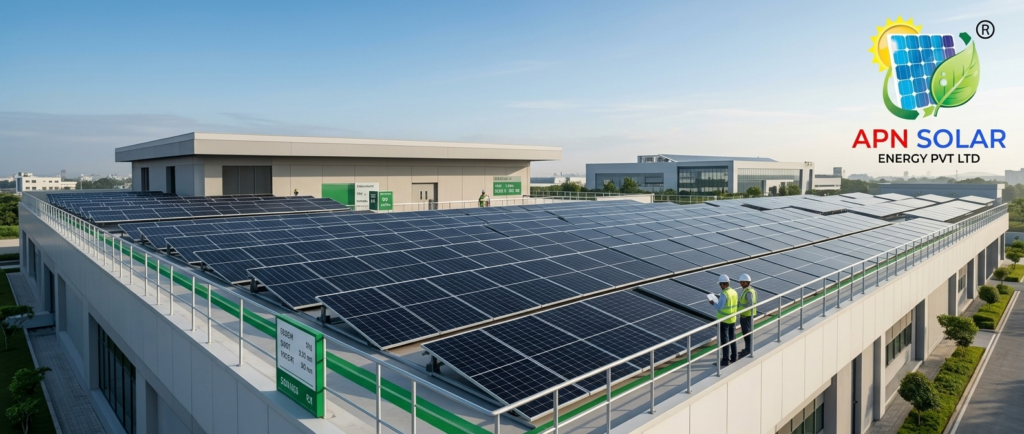
An experienced solar EPC company can manage multiple stages of a project, from the initial site assessment and system design to procurement, installation, commissioning, and post-installation support.
Engineering and System Design
Engineering is the first major stage of a solar EPC project. It involves understanding the site’s requirements and designing a system that is appropriate for the available space, electricity consumption, solar resource, and project objectives.
Depending on the project, engineering may include:
- Site assessment and feasibility analysis
- Solar system sizing
- Shadow and energy analysis
- Module and inverter selection
- Electrical system design
- Structural design
- Cable and protection system planning
- Layout and single-line diagram preparation
Proper system design helps ensure that the solar plant is technically suitable for the site and can operate efficiently after installation.
Procurement and Equipment Selection
The procurement stage involves selecting and sourcing the equipment required for the solar project.
A typical solar project may require solar modules, inverters, mounting structures, cables, electrical protection equipment, monitoring systems, and other balance-of-system components.
An EPC company needs to coordinate these components according to the approved system design and project requirements. Equipment specifications, compatibility, quality, availability, and applicable compliance requirements should all be considered during procurement.
Construction and Installation
The construction stage converts the engineering design into an operating solar installation.
Depending on the type of project, this can include:
- Mounting structure installation
- Solar module installation
- DC and AC electrical work
- Inverter installation
- Cable routing
- Earthing and protection systems
- Electrical connections
- Monitoring system installation
- Safety and quality checks
The installation process needs to account for the site’s physical conditions and the technical requirements of the designed solar system.
Commissioning and Project Execution
After installation, the solar system needs to be tested and commissioned before it is put into regular operation.
Commissioning may involve checking electrical connections, protection systems, equipment operation, monitoring systems, and other relevant parameters.
A structured commissioning process helps identify installation or equipment issues before the system is handed over for regular use.
For larger commercial and industrial projects, EPC experience can also be important because these projects may involve more complex electrical systems, larger capacities, structural requirements, project coordination, and site-specific engineering.
Operations and Maintenance
Solar EPC work does not necessarily end when the system is commissioned. Ongoing operations and maintenance can help monitor system performance and address issues that may affect generation.
Depending on the project, maintenance activities may include:
- System performance monitoring
- Preventive maintenance
- Electrical inspections
- Equipment checks
- Module cleaning
- Fault identification
- Repair and replacement of components where required
When a solar company has both EPC and maintenance capabilities, customers can have a more integrated point of contact throughout the project lifecycle.
Why EPC Experience Matters When Choosing a Solar Company
When comparing solar companies in India, customers should look beyond the company’s ability to supply solar panels. The company’s experience in engineering, procurement, installation, commissioning, and maintenance can also be relevant to the overall project.
For residential projects, this can mean proper system sizing and installation. For commercial and industrial projects, EPC experience becomes particularly relevant because projects can involve larger system capacities, more complex electrical requirements, structural considerations, and coordination between multiple teams.
A solar company with manufacturing and EPC capabilities can therefore offer an integrated approach—from the solar module and system design through installation and ongoing support.
Solar Manufacturing and EPC Under One Company
Some solar companies operate across multiple parts of the solar value chain.
A company with both manufacturing and EPC capabilities can combine product knowledge with project-execution expertise.
This can be relevant when customers are looking for an organization that can support multiple stages of their solar project rather than working with separate companies for manufacturing, engineering and installation.
However, customers should still evaluate the actual capabilities, certifications, project experience, warranties and service infrastructure of the company before making a decision.
APN Solar — Solar Manufacturing and EPC Company in India
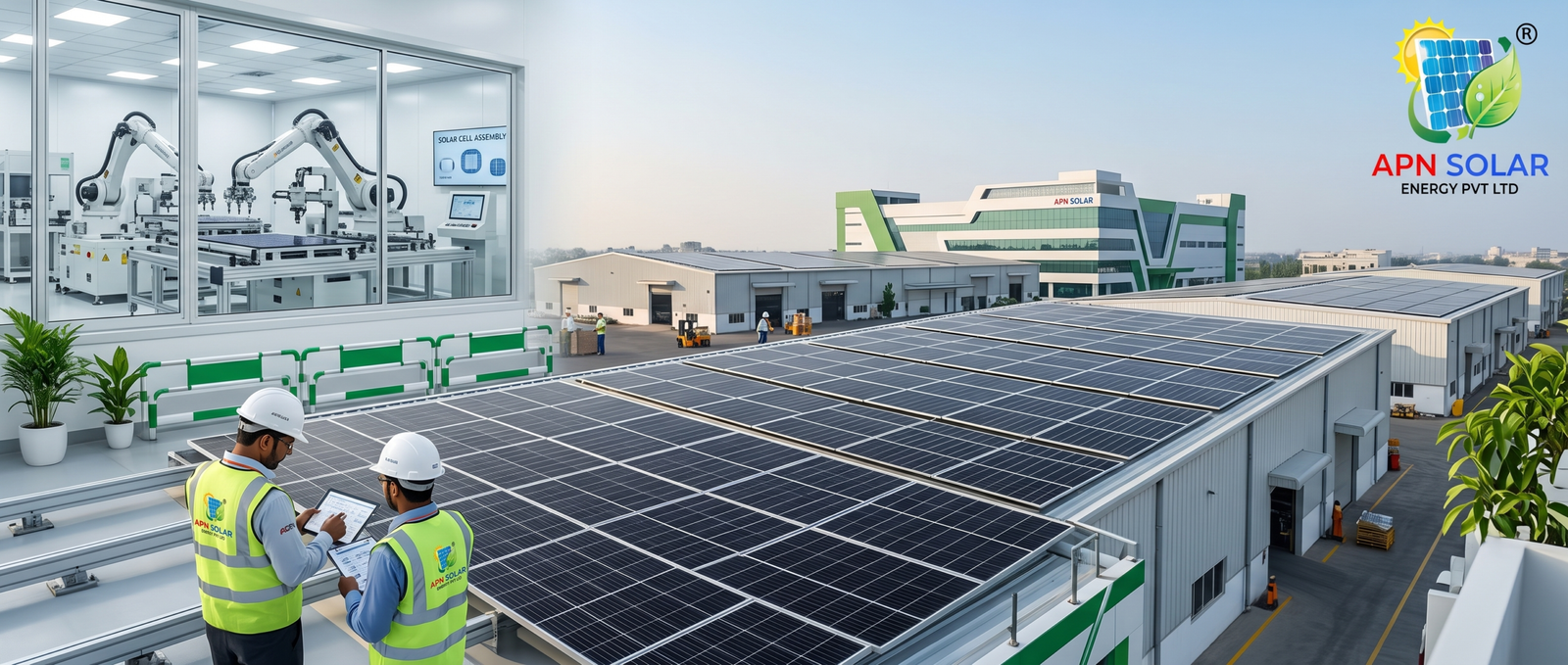
APN Solar Energy Private Limited is an Indian solar manufacturing and EPC company established in 2011. The company operates across the solar value chain, combining solar module manufacturing, engineering, project execution, installation, and operations and maintenance under one organisation.
APN Solar serves residential, commercial, and industrial customers across India and operates its own solar module manufacturing facility in Bhiwandi, Maharashtra. Its manufacturing and EPC capabilities allow the company to work across different stages of a solar project, from product manufacturing and system design to installation and project execution.
APN Solar’s Manufacturing Capabilities
APN Solar operates its own solar module manufacturing facility in Bhiwandi, Maharashtra. The manufacturing facility forms an important part of the company’s identity as a solar manufacturer rather than an OEM-only company.
The manufacturing side of the business supports solar applications across residential, commercial, and industrial projects. When evaluating a solar manufacturer, factors such as product specifications, applicable certifications, manufacturing capabilities, and compliance should be considered alongside the company’s project and service capabilities.
Residential, Commercial and Industrial Solar EPC
Alongside manufacturing, APN Solar provides solar EPC services covering different types of projects.
For residential solar, the company provides rooftop solar solutions involving system planning, installation, and assistance with applicable government subsidy processes.
For commercial and industrial solar, APN Solar provides engineering and project execution for businesses, institutions, industrial facilities, and other suitable applications.
The company also supports ground-mounted solar projects where land availability, site conditions, and project requirements make this type of installation appropriate.
Solar Installation and O&M
Solar project execution does not end with the installation of the modules. Proper commissioning, monitoring, maintenance, and technical support can be important for maintaining system performance over its operating life.
APN Solar provides installation and operations and maintenance support as part of its broader solar services. This includes support for applicable solar installations after project execution.
Pan-India Solar Services
APN Solar serves customers and solar projects across India, with capabilities covering solar manufacturing, engineering, EPC, installation, and maintenance.
Its integrated model brings manufacturing and project execution together, allowing customers to work with a company that operates across multiple stages of the solar value chain.
For customers evaluating a solar company in India, this type of integrated capability can be one factor to consider alongside manufacturing standards, certifications, EPC experience, project experience, warranty terms, and after-sales support.
What Certifications Should You Check When Choosing a Solar Company?
Certifications and compliance can help customers evaluate the products and capabilities offered by a solar company.
Depending on the product and project, relevant areas to examine can include:
- BIS certification
- Applicable IEC standards
- ALMM listing where applicable
- DCR compliance where applicable
- Quality-management certifications
- Environmental and occupational-health certifications
- Product-specific certifications
Customers should verify the current status and applicability of certifications rather than relying only on claims made in marketing materials.
Frequently Asked Questions About Solar Companies in India
What is a solar company in India?
A solar company in India is a business involved in one or more areas of the solar energy value chain, including manufacturing, engineering, EPC, installation, project development or maintenance.
What is the difference between a solar company and a solar EPC company?
A solar company is a broad term that can describe businesses operating in different parts of the solar industry. A solar EPC company specifically focuses on engineering, procurement and construction of solar projects.
Are all solar companies manufacturers?
No. Some solar companies manufacture solar modules, while others focus on EPC, installation, project development or other solar services.
How do I choose a solar company in India?
Consider the company’s technical capabilities, manufacturing or product information, certifications, project experience, installation capabilities, warranty terms, after-sales support and service coverage.
Can one company manufacture solar panels and install them?
Yes. Some integrated solar companies have both manufacturing and installation or EPC capabilities.
What does a solar EPC company do?
A solar EPC company can manage engineering, procurement, construction, installation and commissioning of solar projects. The exact scope depends on the company’s capabilities and the project contract.
Do solar companies provide residential and industrial solar solutions?
Many solar companies work across different segments, including residential, commercial and industrial solar. However, the project size and technical requirements can vary significantly between these segments.
What should I check before buying solar panels?
Check the panel’s technical specifications, applicable certifications, warranty, manufacturer information, compliance requirements and the capabilities of the company supplying and installing the system.
What is an integrated solar company?
An integrated solar company operates across multiple parts of the solar value chain, such as manufacturing, engineering, EPC, installation and maintenance.
Do solar companies provide maintenance after installation?
Many solar companies offer operations and solar panel maintenance services, although the scope and duration of support vary by company and project.
Conclusion
The solar industry in India includes manufacturers, EPC companies, installers, project developers and integrated solar businesses. Understanding the difference between these types of companies can help customers identify the right partner for their solar requirements.
When evaluating a solar company in India, it is useful to look beyond the company’s marketing claims and examine its manufacturing or technical capabilities, certifications, project experience, installation infrastructure, warranties and after-sales support.
For customers looking for an organization with both manufacturing and project-execution capabilities, an integrated solar company can provide support across multiple stages of the solar project lifecycle.
APN Solar Energy operates across solar manufacturing and EPC, serving residential, commercial and industrial solar requirements in India.