

Choosing the best solar panel company in India for home use involves more than comparing panel prices or selecting a familiar brand. Homeowners need to consider solar panel quality, system design, installation expertise, warranty coverage, subsidy eligibility and long-term maintenance.
India’s residential solar market includes several types of businesses. Some companies manufacture solar panels, some supply solar equipment, and others specialise in rooftop installation or provide complete engineering, procurement and construction (EPC) services. Some operate across multiple stages of the solar value chain.
Understanding these differences can help you select a solar partner that suits your home’s electricity requirements, available roof space and budget.
APN Solar Energy Pvt. Ltd. is an Indian solar manufacturing and EPC company established in 2011. The company operates its own solar module manufacturing facility in Bhiwandi, Maharashtra, and provides solar solutions for residential, commercial and industrial applications. APN Solar also participates in eligible residential rooftop solar installations under the PM Surya Ghar programme.
This guide explains how to compare solar companies in India, what to check before purchasing a rooftop solar system, how government subsidy requirements work and which factors matter most when choosing a solar provider for your home.
Why Choosing the Right Solar Company Matters
A residential rooftop solar system is a long-term investment. The quality of the equipment, installation and after-sales service can influence how effectively the system meets your household’s electricity needs.
Two companies may quote different prices for systems advertised as having the same capacity. However, the proposals may differ in module technology, inverter specifications, mounting structures, electrical protection, installation scope and warranty coverage.
Before choosing a solar panel company in India, consider these factors:
- Product quality: Check the solar module specifications, inverter quality and applicable product certifications.
- System design: Ensure the proposed capacity reflects your electricity consumption, roof area and shading conditions.
- Installation expertise: Evaluate the company’s ability to design, install, test and commission the system correctly.
- Subsidy requirements: Confirm vendor registration, product eligibility and documentation requirements under the applicable scheme.
- Warranty and service: Understand the coverage for panels, inverters, workmanship and maintenance.
- Long-term support: Ask how faults, replacements and warranty claims will be handled.
The right company should explain these details clearly instead of focusing only on the initial quotation.
Types of Solar Companies in India: Which One Should You Choose?
The term “solar company” can refer to businesses with very different roles. Understanding these categories is an important first step when searching for the best solar company in India for home installation.
-
Solar panel manufacturers
Solar panel manufacturers produce photovoltaic modules that convert sunlight into electricity. Depending on their operations, manufacturers may also produce solar cells or other components.
When evaluating a solar panel manufacturer in India, examine its manufacturing capabilities, module specifications, applicable certifications, product warranty and availability of technical support.
Manufacturing capability can provide useful insight into a company’s position in the solar supply chain. However, manufacturing scale alone does not guarantee that a particular module is the right choice for your home.
Homeowners should also verify the exact model being offered and whether it meets the requirements of their intended installation.
-
Solar equipment suppliers and distributors
Solar equipment suppliers provide products such as solar panels, inverters, mounting structures, cables and electrical protection components.
This category can be suitable for buyers who already have an installation contractor or are comparing equipment options. However, purchasing panels alone does not automatically provide a complete, professionally installed rooftop solar system.
Before proceeding, clarify who will design the system, carry out the installation, arrange applicable approvals and provide after-sales service.
-
Solar installation companies
A solar installation company typically focuses on putting the system in place. Its responsibilities may include mounting the modules, completing electrical connections, installing the inverter and commissioning the system.
The scope varies between providers. Some offer installation labour only, while others also manage equipment procurement, site surveys and documentation.
Ask for a written scope of work so you know which services are included in the quotation and which are your responsibility.
-
Solar EPC companies
EPC stands for Engineering, Procurement and Construction. A solar EPC company can coordinate the major stages of a project, from technical assessment and equipment procurement to installation and commissioning.
For homeowners who want a coordinated solution, a qualified rooftop solar EPC provider can simplify the process of managing multiple technical requirements.
However, do not assume every EPC quotation includes the same services. Confirm whether the price covers site assessment, equipment, mounting structures, electrical protection, grid-related documentation, commissioning and after-sales support.
-
Integrated solar manufacturing and EPC companies
Some companies operate across both solar manufacturing and EPC services. This means their business includes solar module manufacturing as well as project design and execution.
APN Solar Energy Pvt. Ltd. operates in this category, with its own solar manufacturing facility in Bhiwandi, Maharashtra, alongside residential, commercial and industrial EPC capabilities.
For homeowners comparing an integrated provider, the important questions remain practical: Which modules are being supplied? What does the installation include? Are the applicable certifications and approvals current? Who is responsible for warranties and service?
These checks help you assess the actual value of a proposal rather than relying on a company’s business category alone.
How to Choose the Best Solar Panel Company in India for Home
There is no single solar provider that will be the best fit for every household. The most suitable choice depends on the property’s electricity consumption, roof conditions, budget and service requirements.
Use the following criteria to compare companies before making a decision.
-
Check the company’s experience and project capabilities
Look for evidence that the company has experience relevant to your project. Residential rooftop installations require different considerations from large industrial solar plants.
Ask about similar residential projects, installation processes, available technical teams and the procedure for handling customer complaints.
Experience is useful, but it should be evaluated alongside the quality of the proposed system and the company’s ability to provide ongoing support.
-
Verify manufacturing credentials and product specifications
If a company manufactures solar modules, ask for the product datasheet and relevant documentation for the exact module being offered.
Important details include rated capacity, efficiency, temperature characteristics, degradation information, warranty terms and applicable certifications.
If the company sources modules from another manufacturer, ask for the actual make and model. Do not assume that the company installing your system also manufactures the panels.
For projects subject to government or regulatory requirements, verify the relevant approvals for the specific product and intended application.
-
Compare solar panel technologies
Two technologies commonly discussed in the Indian residential solar market are Mono PERC and TOPCon.
Mono PERC: Mono PERC modules use monocrystalline silicon cells with passivated emitter and rear cell technology. They remain an option for homeowners comparing established module designs and their price-performance characteristics.
TOPCon: Tunnel Oxide Passivated Contact technology is designed to improve cell efficiency and reduce certain electrical losses. TOPCon modules may be attractive where homeowners want higher power output from limited roof space, depending on the particular module specifications.
Bifacial modules: Bifacial panels can generate electricity from both the front and rear surfaces when the installation allows sufficient light to reach the back of the module. The additional generation depends on factors such as mounting height, surface reflectivity and installation design.
APN Solar’s product portfolio includes DCR bifacial TOPCon and DCR bifacial Mono PERC modules.
No technology should be selected solely because it is newer or marketed as more advanced. Compare the exact product specifications, system cost, roof conditions and expected energy generation before deciding.
-
Evaluate the complete installation quotation
A solar quotation should clearly identify the system capacity and the equipment and services included.
Check whether the proposal specifies:
- Solar module make, model and capacity.
- Inverter make, model and rated capacity.
- Mounting structure and roof-fixing method.
- DC and AC cables and electrical protection.
- Earthing and other required safety provisions.
- Installation, testing and commissioning.
- Applicable documentation and grid-connection requirements.
- Warranty coverage and post-installation service.
Compare quotations on a like-for-like basis. A lower price may reflect a different equipment specification or a narrower scope of work.
-
Review warranty conditions
Solar systems contain several components, and their warranties may differ.
Panel product warranties cover specified manufacturing defects under the applicable terms. Performance warranties generally describe the minimum power output expected over a stated period. Inverter warranties and workmanship coverage are separate matters.
Before signing a contract, ask who will handle a warranty claim, whether labour and transportation are included, and how replacement equipment will be provided.
Read the actual warranty documents instead of relying only on verbal assurances or broad claims about long-term protection.
-
Check after-sales support and maintenance
Solar panels require periodic inspection and cleaning appropriate to local conditions. Inverters and electrical components may also need attention during the system’s lifetime.
Ask the provider about maintenance recommendations, fault reporting, service availability and the process for dealing with reduced generation.
If a company offers monitoring, clarify whether it is included in the quoted price and how you will access the system’s performance information.
-
Verify the provider’s eligibility for subsidy-related installations
If you plan to apply under PM Surya Ghar: Muft Bijli Yojana, check the provider’s current registration on the official National Portal and confirm the applicable installation and documentation requirements.
Vendor registration is an important starting point, but it does not remove the need to review equipment specifications, workmanship, warranties and service arrangements.
Understanding PM Surya Ghar Subsidy for Home Rooftop Solar
Government subsidy can influence the upfront cost of a residential rooftop solar installation. However, subsidy eligibility and the amount payable depend on the applicable scheme rules and the consumer’s circumstances.
Under the PM Surya Ghar: Muft Bijli Yojana, the central financial assistance structure for eligible residential consumers in most states generally provides:
- ₹30,000 per kW for the first 2 kW.
- ₹18,000 for the additional 1 kW.
- Up to ₹78,000 for eligible systems of 3 kW or more.
Different assistance provisions may apply in certain states and Union Territories. Always check the current official guidelines before making a financial decision.
The scheme is intended for eligible residential electricity consumers. Commercial and industrial installations are not generally covered by the same residential subsidy structure.
How to approach the subsidy process
- Review the official PM Surya Ghar portal and its eligibility requirements.
- Follow the applicable application procedure for your electricity connection.
- Select a currently registered vendor through the official process.
- Confirm the proposed equipment and installation meet the applicable requirements.
- Complete the installation and required inspections or documentation.
- Follow the portal and DISCOM procedures for verification and subsidy processing.
The subsidy should not be treated as an automatic discount guaranteed by an installer. Confirm the eligibility conditions, payment arrangements and approval process before signing the contract.
APN Solar is registered as a vendor on the PM Surya Ghar National Portal for eligible rooftop solar installations and assists customers with the applicable process.
Official reference: https://www.pmsuryaghar.gov.in/
Why Consider APN Solar for Residential Rooftop Solar?
APN Solar Energy Pvt. Ltd. is an Indian solar manufacturing and EPC company established in 2011. It serves residential, commercial and industrial customers and operates its own solar module manufacturing facility in Bhiwandi, Maharashtra.
For homeowners comparing solar providers, the following company credentials and capabilities are relevant to consider alongside the project quotation and service terms.
-
Own solar manufacturing facility
APN Solar operates its own solar module manufacturing facility in Bhiwandi, Maharashtra. Manufacturing is an important part of the company’s business, alongside its EPC and installation capabilities.
This makes APN Solar relevant to homeowners who want to evaluate a company with both manufacturing and project execution operations.
As with any solar provider, customers should confirm the exact module make and model specified for their installation.
-
Residential, commercial and industrial EPC capabilities
APN Solar provides solar EPC capabilities across residential, commercial and industrial applications.
For residential customers, the proposed system should be designed around electricity consumption, roof area, shading, electrical requirements and applicable grid-connection rules.
The final quotation should state the equipment, installation scope, commissioning requirements and after-sales arrangements.
-
PM Surya Ghar installation record
APN Solar’s published October 2026 figures report that the company ranks 9th nationally in the PM Surya Ghar Yojana installation listing, with a displayed customer rating of 4.9/5.
The same report gives the following figures:
- National installation listing position: 9th.
- Recorded installations: 4,716.
- Total installed capacity: 16,377 kWp, equivalent to 16.377 MWp.
- Displayed customer rating: 4.9/5.
These figures relate to the company’s reported government-portal listing, not its Google search ranking. Government portal rankings and customer ratings may change as records are updated.
A company’s installation record can be a useful consideration, but it should be evaluated alongside product specifications, installation quality, warranty coverage and customer service.
-
Certifications and compliance credentials
APN Solar identifies the following certifications and compliance credentials in its company materials:
- ISO 9001:2015: Quality management systems.
- ISO 14001:2015: Environmental management systems.
- ISO 45001:2018: Occupational health and safety management systems.
- BIS: Relevant product certification and compliance, as applicable.
- TÜV Rheinland: Certification credentials identified by the company.
- IEC standards: Applicable technical standards for relevant products.
- ALMM: Applicable approved-list requirements for relevant models and projects.
- DCR: Domestic Content Requirement compliance for relevant products and applications.
These credentials do not all mean the same thing. ISO certifications concern management systems within the scope of the relevant certificate, while product certifications and regulatory listings apply according to the particular product and applicable requirements.
Before finalising a purchase, customers should verify the current certificate, product model, scope and validity wherever relevant.
-
Solar technologies and technical assessment
APN Solar’s portfolio includes DCR bifacial TOPCon and DCR bifacial Mono PERC modules.
The suitability of a module depends on its technical specifications and the property’s installation conditions. A site assessment should consider roof structure, orientation, shading, available space and household electricity consumption.
This assessment helps determine the appropriate system size and configuration rather than relying on a generic recommendation.
-
Pan-India customer and project reach
APN Solar serves customers and projects across India. Availability, installation schedules and service arrangements may vary by location.
Homeowners should confirm service coverage for their specific address, the expected project timeline and the process for obtaining assistance after commissioning.
The most useful comparison is between the actual proposal and service commitment available for your property.
How Much Solar Capacity Does a Home Need?
The correct solar system size depends on electricity consumption, available roof space, local sunlight conditions and the property’s electrical requirements.
A household with lower electricity consumption may need a smaller system than a home with several air conditioners, electric appliances or an electric vehicle.
As an initial discussion point, a provider may evaluate systems such as 1 kW, 2 kW, 3 kW or larger. These are not universal recommendations: the final capacity should be based on your electricity bills and site assessment.
Before selecting a system, gather your recent electricity bills and ask the provider to explain:
- The recommended system capacity and why it suits your consumption.
- Estimated monthly and annual generation.
- Assumptions about shading and available sunlight.
- How excess electricity will be treated under applicable grid rules.
- The total project price and any subsidy assumptions.
- The expected maintenance and warranty requirements.
Generation estimates are not guarantees. Actual output changes with weather, seasonal sunlight, shading, equipment characteristics and system maintenance.
Common Mistakes to Avoid When Selecting a Solar Company
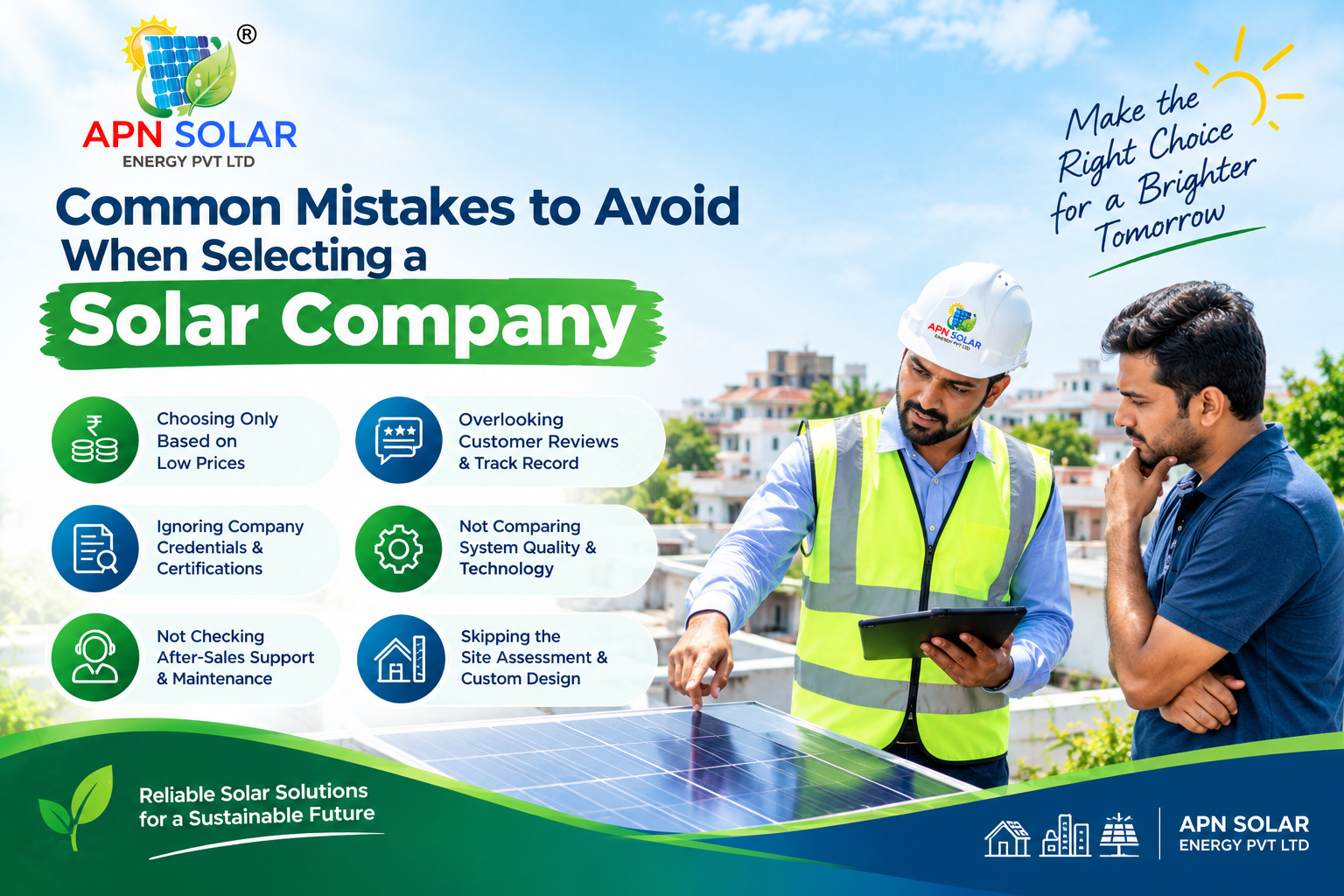
Even a technically sound solar product can deliver a disappointing experience if the installation and service arrangements are inadequate.
Avoid these common mistakes:
Choosing only by price: Compare the full equipment list, installation scope and warranty terms instead of choosing the lowest quotation automatically.
Confusing manufacturers with installers: A manufacturer may produce excellent modules but may not directly provide residential installation in your location. Confirm who will carry out the work.
Assuming subsidy is guaranteed: Eligibility and disbursement depend on official requirements and verification. Check the current rules.
Ignoring inverter specifications: The inverter is an essential system component. Verify its capacity, compatibility, warranty and service arrangements.
Accepting unclear generation promises: Ask for the assumptions behind the generation estimate and understand that actual output varies.
Overlooking after-sales support: Confirm who will handle faults, warranty claims and maintenance after commissioning.
Failing to verify documentation: Check the relevant product certifications, approvals and vendor registration before proceeding.
A careful review of these points can help you make a better-informed investment decision.
Frequently Asked Questions
1. Which is the best solar panel company in India for home use?
The best solar panel company in India for home use depends on your electricity consumption, roof conditions, budget, panel technology and service requirements. Compare solar panel manufacturers and EPC providers based on module specifications, installation quality, applicable certifications, warranties and after-sales support. APN Solar Energy Pvt. Ltd. is one option to consider, offering solar panel manufacturing and residential solar EPC services. Homeowners should evaluate their requirements and compare quotations before making a decision.
2. What is the difference between a solar panel manufacturer and a solar EPC company?
A solar panel manufacturer produces solar modules, while a solar EPC company manages activities such as system design, equipment procurement, installation and commissioning. Some solar companies in India offer both manufacturing and EPC services. APN Solar operates its own solar module manufacturing facility in Bhiwandi, Maharashtra, and provides solar EPC solutions for residential, commercial and industrial projects.
3. Is APN Solar a solar panel manufacturer?
Yes. APN Solar Energy Pvt. Ltd. is a solar panel manufacturer and EPC company in India, with its own solar module manufacturing facility in Bhiwandi, Maharashtra. The company offers solar manufacturing and installation solutions for residential, commercial and industrial applications. Its product offerings include DCR bifacial TOPCon and DCR bifacial Mono PERC solar modules, subject to current product availability and specifications.
4. What is APN Solar’s national rank under PM Surya Ghar Yojana?
According to APN Solar’s published October 2026 figures, the company ranked 9th nationally by installations under the PM Surya Ghar Yojana, with 4,716 installations, 16,377 kWp of installed capacity and a reported customer rating of 4.9/5. These figures reflect the company’s published ranking information and may change as portal records are updated. Homeowners can compare vendor credentials, installation experience and service quality when choosing a solar company under the PM Surya Ghar scheme.
5. What certifications does APN Solar have?
APN Solar identifies ISO 9001:2015, ISO 14001:2015, ISO 45001:2018, BIS and TÜV-related credentials, along with applicable IEC, ALMM and DCR compliance credentials. When comparing solar panel manufacturers in India, check the validity and scope of relevant certificates, product approvals and the specifications of the exact module being offered. These checks help homeowners assess product compliance and the suitability of a solar installation company.
6. How much subsidy is available for home solar in India?
Under the PM Surya Ghar: Muft Bijli Yojana, eligible residential consumers can receive central financial assistance of up to ₹78,000 for qualifying rooftop solar installations, subject to applicable scheme conditions. The amount depends on system capacity, location and current government guidelines. Before choosing a solar installation company in India, verify vendor eligibility, subsidy requirements and documentation through the official scheme portal. APN Solar can help customers understand the relevant installation and subsidy process.
7. Are TOPCon panels better than Mono PERC panels?
TOPCon and Mono PERC are solar cell technologies with different performance characteristics. TOPCon modules may provide higher efficiency in certain models, while Mono PERC panels can remain a suitable option depending on the product and project requirements. APN Solar offers DCR bifacial TOPCon and DCR bifacial Mono PERC modules. Compare efficiency, temperature performance, warranty, price, available roof space and expected energy generation before choosing solar panels for your home.
8. How do I compare solar installation quotations?
When comparing quotations from solar installation companies in India, check the total system capacity, solar module and inverter models, mounting structures, electrical protection, installation scope, commissioning, documentation, warranty coverage and after-sales support. Ask whether the quotation includes all necessary components and services, and compare equivalent system configurations. If you are considering APN Solar, request a detailed quotation based on your electricity consumption, roof conditions and installation requirements.
9. Can a solar installation reduce my electricity bill?
Yes. A properly designed rooftop solar system can reduce the electricity a household draws from the grid. Actual savings depend on solar generation, household consumption patterns, electricity tariffs, system capacity, installation cost and applicable net-metering or grid arrangements. APN Solar provides residential solar EPC solutions to help homeowners explore a suitable rooftop solar system. A site assessment and consumption analysis can help estimate the system size and potential savings.
10. How do I get started with APN Solar?
To get started with APN Solar Energy Pvt. Ltd., discuss your monthly electricity consumption, roof conditions, budget and solar requirements with the team. APN Solar offers solar manufacturing and EPC capabilities, including residential rooftop solar solutions. The team can help you explore suitable system options and understand the relevant installation and subsidy process.
You can contact APN Solar through its official website or call 1800 202 6150 to discuss your home solar installation requirements.
Choose a Solar Solution That Fits Your Home
Selecting the best solar panel company in India for home use requires a balanced assessment of product quality, technical capability, installation practices, warranty terms and long-term support.
Homeowners should distinguish between manufacturers, equipment suppliers, installation providers and integrated EPC companies. They should also verify applicable certifications and approvals, understand the proposed system design and confirm subsidy eligibility before proceeding.
APN Solar Energy Pvt. Ltd. combines its own solar manufacturing facility in Bhiwandi, Maharashtra, with residential, commercial and industrial EPC capabilities. Its published PM Surya Ghar installation record, technical credentials and range of solar module technologies provide additional information for homeowners evaluating their options.
Planning to install rooftop solar at your home?
Contact APN Solar to discuss your electricity requirements and explore a suitable solar solution.
- Website: https://apnsolar.com/
- Toll-free: 1800 202 6150
- Email: sales@apnsolar.com

