Solar energy technology has evolved significantly over the last decade. Earlier, most people associated solar power only with large rigid panels installed on rooftops or commercial buildings. Today, the market includes several newer technologies designed for portability, lightweight applications, and unconventional installation surfaces. One of the most discussed innovations in this category is the flexible solar panel.
Flexible solar panels are becoming increasingly visible in applications such as RVs, boats, camping setups, portable charging systems, and lightweight structures. Their ability to bend slightly and adapt to curved surfaces has made them attractive for situations where traditional solar panels may be difficult to install.
In India, growing interest in outdoor travel, off-grid systems, emergency backup solutions, and mobile solar setups has also increased awareness around flexible solar panels India consumers can access through online and offline markets. At the same time, many buyers remain unsure about their real-world performance, durability, efficiency, and whether they can replace traditional rooftop panels.
This guide explains flexible solar panels in a practical and balanced way. Instead of presenting them as a “better” alternative to standard panels, the goal is to help readers understand where they work well, where they have limitations, and what factors should be considered before purchasing one.
What is a Flexible Solar Panel?
A flexible solar panel is a photovoltaic panel designed using lightweight materials that allow the panel to bend slightly without breaking. Unlike traditional solar modules, which are built using tempered glass and rigid aluminum frames, flexible panels use thin solar cells mounted on flexible backing materials. Flexible panels are part of the broader category of solar technologies available today, and understanding the different types of solar panels in India can help users compare their applications, efficiency, and long-term practicality.
The core purpose of this design is not necessarily higher efficiency, but greater installation flexibility and portability.
Traditional rigid panels are highly effective for permanent rooftop systems because they provide long operational life and strong structural protection. Flexible panels, on the other hand, are intended for applications where weight, mobility, or curved surfaces are important considerations.
Most flexible panels are much thinner and lighter than conventional solar modules. Some can even be rolled or folded depending on the design and materials used.
These panels are commonly used in:
- Camper vans and caravans
- Boats and marine systems
- Portable power kits
- Camping equipment
- Temporary structures
- Lightweight rooftops
Although they generate electricity through the same photovoltaic process as rigid panels, their construction and performance characteristics are different.
How Flexible Solar Panels Work
Flexible solar panels work using the photovoltaic effect, which is the process of converting sunlight into electricity.
When sunlight hits the photovoltaic cells inside the panel, the energy from sunlight excites electrons within the semiconductor material. This movement of electrons generates direct current (DC) electricity. The electricity can then be used directly for compatible devices, stored in batteries, or converted into alternating current (AC) using an inverter.
The science behind electricity generation remains similar to standard solar panels. The difference lies mainly in the panel structure and manufacturing process.
Thin-Film Technology
Many flexible solar panels use thin film solar panels technology. In this method, ultra-thin layers of photovoltaic material are deposited onto flexible surfaces such as plastic, polymer, or metal sheets.
Because the solar layer is extremely thin, the panel becomes lightweight and somewhat bendable.
Thin-film solar technology generally offers:
- Reduced weight
- Better flexibility
- Simpler transportation
- Easier integration into portable products
However, thin-film panels often have lower efficiency compared to conventional crystalline silicon panels. This means they may require more surface area to produce the same amount of electricity.
Materials Used in Flexible Solar Panels
Different flexible panels use different photovoltaic materials depending on the intended balance between flexibility, efficiency, and durability. Modern solar manufacturing technologies are also evolving rapidly, and advanced cell technologies such as TOPCon solar panels are becoming increasingly important in the broader solar industry.
Monocrystalline Silicon
Monocrystalline flexible panels are among the more efficient flexible options available today. These panels use thin monocrystalline solar cells integrated into flexible backing layers.
They are commonly used in:
- RV systems
- Portable power stations
- Boat installations
Monocrystalline flexible panels usually perform better in limited space because of their higher efficiency. Users comparing flexible monocrystalline technology with conventional rooftop modules can also explore the detailed comparison between monocrystalline vs polycrystalline solar panels for a better understanding of performance differences.
Amorphous Silicon
Amorphous silicon is a thin-film material that offers greater flexibility but lower efficiency.
Its advantages include:
- Lightweight construction
- Better performance in diffuse light
- Lower manufacturing complexity
However, lower power density means larger panel surfaces may be required.
CIGS Technology
The CIGS stands for Copper Indium Gallium Selenide, a thin-film technology used in some advanced flexible solar products.
CIGS panels are known for:
- Better flexibility
- Relatively higher efficiency among thin-film technologies
- Lightweight performance
However, they are often more expensive than basic flexible solar products. Buyers interested in comparing modern solar cell technologies can also read about PERC vs TOPCon vs HJT solar panels to understand how different technologies impact efficiency and performance.
Types of Flexible Solar Panels
Flexible solar panels are available in several forms, each designed for different use cases.
Thin-Film Flexible Panels
Thin-film flexible panels are among the lightest solar products available in the market. They are often used in portable applications because they can be rolled or folded more easily than crystalline alternatives.
These panels are commonly chosen for:
- Camping
- Emergency charging kits
- Temporary installations
- Lightweight mobile systems
The trade-off is usually lower efficiency and shorter lifespan compared to rigid crystalline panels.
Monocrystalline Flexible Panels
Monocrystalline flexible panels combine relatively high efficiency with moderate flexibility.
Unlike very soft thin-film products, these panels typically bend only slightly. They are not designed for extreme folding but can adapt to curved surfaces.
They are widely used in:
- Camper vans
- Marine installations
- Portable energy systems
Many users prefer this category because it balances portability and power output.
Foldable Portable Solar Panels
Some portable solar panels are designed primarily for mobility rather than permanent installation.
These systems often include:
- Foldable solar sections
- USB charging ports
- Carry handles
- Integrated controllers
Portable foldable panels are increasingly used for outdoor travel and backup charging applications.
Advantages of Flexible Solar Panels
Flexible solar panels offer several practical advantages in situations where conventional solar modules may be difficult to use.
Lightweight Construction
One of the biggest reasons people choose flexible panels is their low weight.
Traditional rooftop panels can weigh over 20 kilograms each because of the glass and aluminum frame. Flexible panels are significantly lighter, making transportation and installation easier.
This becomes especially important in:
- RVs
- Boats
- Mobile structures
- Temporary shelters
Lower weight also reduces structural stress on roofs and mounting surfaces.
Easier Installation
Flexible solar panels are often easier to install than rigid systems.
Some installations use adhesive mounting methods instead of heavy metal frames. This can simplify setup in mobile environments where drilling into surfaces may not be desirable.
Installation flexibility is useful on:
- Curved roofs
- Uneven surfaces
- Portable structures
However, installation quality still matters significantly for long-term durability and heat management.
Portable and Travel-Friendly
Portable solar panels are designed for mobility. Many models can be carried, folded, or transported without requiring complex mounting systems.
This makes them useful for:
- Camping
- Outdoor photography
- Trekking
- Emergency charging
- Disaster response kits
In recent years, portable solar charging systems have become increasingly common among travelers who require off-grid electricity access. Flexible solar panels are also commonly used in portable and off-grid solar system setups where grid electricity access may not be available.
Suitable for Curved Surfaces
A major limitation of traditional solar panels is that they work best on flat, stable surfaces.
Flexible panels can adapt to slight curves, making them useful for:
- Boat decks
- Caravan roofs
- Curved metal structures
This flexibility opens installation possibilities that may not work with rigid framed panels.
Lower Structural Load
Some rooftops or mobile structures cannot safely support heavy solar arrays.
Flexible panels place less load on supporting structures, which can help in lightweight construction environments.
Limitations of Flexible Solar Panels
Although flexible panels provide installation advantages, they also have important limitations that buyers should understand clearly.
Lower Efficiency
Many flexible solar panels have lower efficiency compared to traditional monocrystalline rooftop panels.
Efficiency refers to how effectively a panel converts sunlight into electricity.
Because flexible panels often use thinner materials and lightweight construction methods, they may generate less electricity per square meter.
This becomes important when installation space is limited.
For example:
- A rigid rooftop panel may generate more power using the same surface area
- Flexible panels may require additional space for equivalent output
However, efficiency varies significantly depending on panel quality and technology type.
Heat Buildup Issues
Traditional rooftop solar panels are usually mounted with some airflow underneath, which helps dissipate heat.
Flexible panels are sometimes mounted directly onto surfaces using adhesives. This can reduce airflow and increase heat buildup.
Excessive heat may affect:
- Performance efficiency
- Long-term durability
- Cell degradation rate
Heat management is one of the overlooked factors in flexible solar installations.
Shorter Lifespan
Flexible panels generally have shorter operational lifespans than rigid panels. Understanding factors such as heat exposure and long-term solar panel degradation rates is important when evaluating durability expectations.
Traditional solar modules commonly last 20–30 years under proper conditions. Flexible panels often last between 5–15 years depending on:
- Material quality
- Environmental exposure
- Installation method
- Usage conditions
The absence of thick tempered glass protection can make flexible panels more vulnerable to environmental wear.
Durability Concerns
Although flexible panels are marketed as convenient, they are not always more durable.
Continuous exposure to:
- UV radiation
- Moisture
- Heat
- Physical bending
can gradually affect the panel structure.
Marine environments can also accelerate corrosion and degradation if panels are not designed for such conditions.
Higher Cost Per Watt
Flexible panels often cost more per watt than traditional rigid panels.
This may seem surprising because they are smaller and lighter, but specialized manufacturing and lightweight materials increase production costs.
For permanent residential systems, rigid panels are usually more economical over the long term.
Flexible Solar Panel vs Traditional Solar Panel
These Flexible and traditional solar panels are designed for different purposes rather than direct competition.
| Feature | Flexible Solar Panel | Traditional Solar Panel |
|---|---|---|
| Structure | Lightweight and bendable | Rigid glass and aluminum |
| Weight | Low | High |
| Efficiency | Moderate | Higher |
| Lifespan | 5–15 years | 20–30 years |
| Portability | Excellent | Limited |
| Durability | Moderate | Strong |
| Installation | Easier on curved surfaces | Better for permanent structures |
| Cost Per Watt | Higher | Lower |
| Common Applications | RVs, boats, camping | Homes, commercial buildings |
Traditional panels remain the dominant choice for rooftop residential systems because of their efficiency and lifespan advantages. Homeowners comparing options can also explore some of the best solar panels for Indian homes based on efficiency, durability, and climate suitability.
Flexible solar panels are more practical in specialized scenarios where portability and lightweight construction matter more than maximum long-term energy output.
Applications of Flexible Solar Panels
Flexible solar panels are mainly used in applications where conventional rigid panels are impractical.
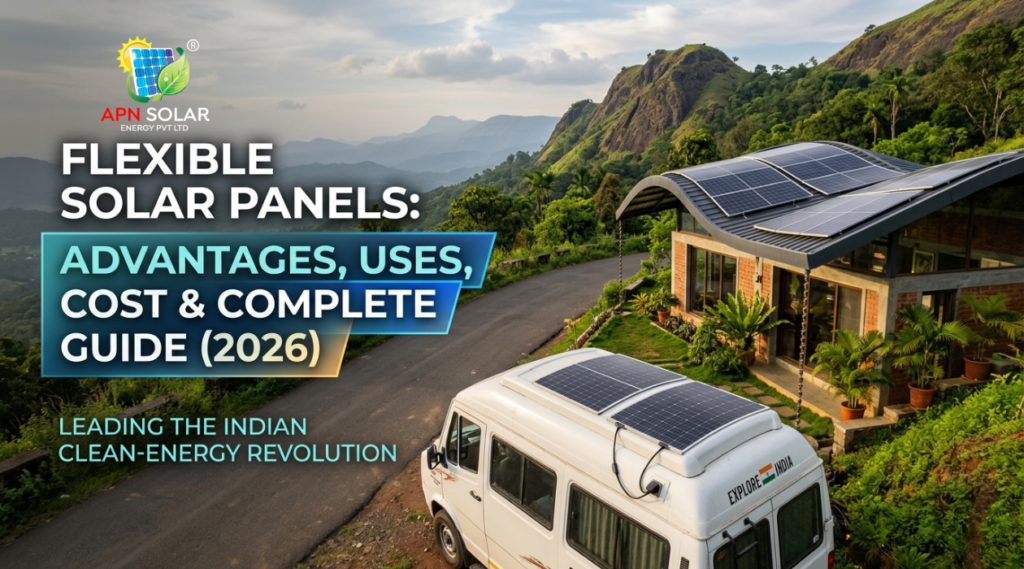
RVs and Caravans
One of the most common applications is recreational vehicles and caravans.
These vehicles often have curved roofs and weight limitations. Flexible panels help reduce additional load while providing power for:
- Lights
- Fans
- Portable refrigerators
- Device charging
Many travelers use flexible panels as part of off-grid travel systems.
Marine and Boat Installations
Boats present unique installation challenges because surfaces are often curved and space is limited.
Flexible panels are used on:
- Yachts
- Fishing boats
- Houseboats
Marine-grade flexible panels are typically designed with improved moisture resistance.
Camping and Outdoor Activities
Camping setups increasingly use portable solar charging systems.
Foldable or lightweight panels are useful for charging:
- Smartphones
- Cameras
- GPS devices
- Portable batteries
For extended outdoor trips, portable solar systems can reduce dependence on fuel-based generators.
Emergency Backup Systems
Flexible solar panels are also used in emergency preparedness kits.
In disaster situations or power outages, portable solar systems may help provide limited electricity access for communication devices and lighting.
Curved Roof Structures
Some architectural structures cannot easily support rigid framed panels.
Flexible systems may be installed on:
- Curved metal roofs
- Portable cabins
- Lightweight structures
However, energy generation capacity must still be evaluated realistically.
Flexible Solar Panel Price in India (2026)
The price of flexible solar panels in India depends on several factors including wattage, technology, build quality, efficiency, and waterproofing.
In general, flexible panels remain more expensive per watt compared to standard rooftop solar modules.
Estimated Flexible Solar Panel Prices in India
| Wattage | Approximate Price Range (2026) |
|---|---|
| 20W–50W | ₹2,000 – ₹6,000 |
| 100W | ₹6,000 – ₹12,000 |
| 200W | ₹12,000 – ₹22,000 |
| 300W+ | ₹20,000 – ₹40,000+ |
Prices vary depending on:
- Product quality
- Imported vs domestic manufacturing
- Efficiency ratings
- Accessories included
- Weatherproofing standards
Why Flexible Panels Cost More Per Watt
Several factors contribute to higher pricing:
- Lightweight composite materials
- Specialized manufacturing
- Portable design features
- Lower production scale compared to standard panels
High-efficiency monocrystalline flexible panels usually cost more than basic thin-film products.
Cost Comparison with Traditional Panels
Traditional rigid panels remain more economical for permanent installations because they generally offer:
- Better efficiency
- Longer lifespan
- Lower long-term energy cost
Flexible panels are usually purchased for convenience and mobility rather than lowest cost per watt.
Are Flexible Solar Panels Worth It?
Whether flexible solar panels are worth buying depends entirely on the intended application.
They can be highly practical in some situations while being less suitable in others.
Situations Where Flexible Panels Make Sense
Flexible panels may be useful for:
- RV travel
- Boats and marine use
- Camping systems
- Lightweight rooftops
- Temporary power setups
- Portable charging applications
In these cases, portability and reduced weight can outweigh lower efficiency.
Situations Where Traditional Panels Are Better
Traditional rigid panels are generally more suitable for:
- Residential rooftops
- Commercial solar systems
- Long-term fixed installations
- Maximum energy generation
For homeowners looking to reduce electricity bills over decades, rigid systems often provide stronger long-term value.
Practical Perspective
Flexible solar panels should not be viewed as a universal replacement for standard rooftop solar systems. Users planning permanent residential installations should also understand the difference between on-grid and off-grid solar systems before selecting a solar setup.
Instead, they serve a specialized role within the broader solar industry.
Their strongest advantages are:
- Portability
- Lightweight construction
- Installation flexibility
Their biggest limitations are:
- Shorter lifespan
- Lower efficiency
- Higher cost per watt
Understanding this balance is important before making a purchase decision.N
Role of Solar Companies and Installers
Professional solar installers play an important role in helping users choose appropriate solar technologies. Users planning residential systems can also understand the complete solar panel installation process in India before selecting a system.
Different applications require different system designs, and flexible panels are not always the correct solution.
Installers may evaluate:
- Energy requirements
- Available installation space
- Surface structure
- Weather exposure
- Mobility needs
Several companies in India, including trusted solar companies in India such as APN Solar, Tata Power Solar, Waaree Energies, Loom Solar, and others, are associated with solar products and installation services. Product offerings vary by region and application.
Rather than focusing only on brand names, buyers should compare:
- Efficiency ratings
- Warranty terms
- Build quality
- Waterproof ratings
- Installation support
Neutral technical evaluation is usually more useful than marketing claims.
Common Mistakes When Buying Flexible Solar Panels
One common mistake is assuming that all flexible panels are highly efficient. In reality, performance varies significantly between products.
Another issue is purchasing panels based only on portability without considering actual energy requirements. Some users expect small portable panels to run heavy appliances continuously, which may not be realistic.
Buyers also sometimes ignore installation conditions. Excessive heat buildup, improper mounting, or excessive bending can reduce lifespan considerably.
Very cheap products may also use lower-quality materials that degrade quickly under sunlight and moisture exposure.
Understanding realistic expectations is important before investing in any portable solar technology.
Maintenance Tips for Flexible Solar Panels
Flexible solar panels require regular maintenance to maintain performance and durability.
Cleaning is important because dust accumulation reduces energy generation. Following proper solar panel cleaning practices can help maintain efficiency and reduce long-term performance issues. In India, especially in dusty or coastal regions, periodic cleaning can improve output noticeably.
Use soft cleaning materials and avoid abrasive tools that may damage protective coatings.
Excessive bending should also be avoided. Although flexible panels can bend slightly, they still contain delicate photovoltaic cells that may crack under stress.
Proper ventilation helps reduce overheating. Installations that trap heat underneath the panel may experience faster degradation over time.
For portable systems, careful storage is important. Panels should be protected from sharp folds, heavy impact, and prolonged moisture exposure when not in use.
Conclusion
Flexible solar panels represent a growing segment within the solar energy industry, particularly for portable and lightweight applications. Their ability to adapt to curved surfaces and reduce structural load makes them useful in environments where traditional rigid panels are difficult to install.
They are commonly used in RVs, boats, camping systems, portable charging setups, and temporary structures. For users who prioritize mobility and lightweight installation, flexible solar technology can provide practical advantages.
At the same time, flexible solar panels are not automatically superior to traditional systems. They often have lower efficiency, shorter lifespan, and higher cost per watt compared to conventional rigid panels.
For permanent rooftop installations focused on long-term electricity generation, traditional solar panels generally remain the more practical choice, especially for homeowners looking to understand how solar panels reduce electricity bills in India over the long term.
The most important factor is selecting the right technology for the right application. Instead of viewing flexible panels as a replacement for standard solar systems, they are better understood as a specialized solution designed for portability, mobility, and installation flexibility.
As solar technology continues to evolve, future improvements in materials and manufacturing may further improve the durability and efficiency of flexible solar panels. For now, understanding both their strengths and limitations is essential for making an informed decision.
Frequently Asked Questions
1. What are flexible solar panels?
Flexible solar panels are lightweight photovoltaic panels designed to bend slightly during installation. They are commonly used in portable and mobile applications such as RVs, boats, camping systems, and curved roof structures where traditional rigid panels may not be practical.
2. Are flexible solar panels efficient?
Flexible solar panels can provide reasonable efficiency for portable applications, but many models are less efficient than traditional rigid panels. High-quality monocrystalline flexible panels generally perform better than basic thin-film alternatives, especially in limited installation spaces.
3. How long do flexible solar panels last?
Most flexible solar panels last around 5–15 years depending on build quality, installation method, and environmental exposure. Traditional rigid solar panels usually have longer lifespans because they use stronger glass and aluminum protective structures.
4. Can flexible solar panels power a home?
Flexible solar panels can support limited household energy needs, but they are usually not the primary choice for powering an entire home. Traditional rooftop systems generally offer higher efficiency, greater capacity, and better long-term economics for residential use.
5. Are flexible solar panels waterproof?
Many flexible solar panels are designed to be water-resistant or waterproof for outdoor environments. However, waterproof ratings differ between products, so checking specifications and ensuring proper installation is important, especially in marine or heavy rainfall conditions.
6. Can flexible solar panels be installed on curved roofs?
Yes, flexible panels are commonly used on slightly curved roofs and surfaces where rigid panels may not fit properly. However, every panel has a maximum bending limit, and excessive curvature may damage the internal solar cells.
7. Are flexible solar panels suitable for Indian weather conditions?
Flexible solar panels can operate in Indian weather conditions, including high sunlight regions. However, prolonged exposure to heat, dust, humidity, and moisture may affect long-term durability, making maintenance and product quality important factors.