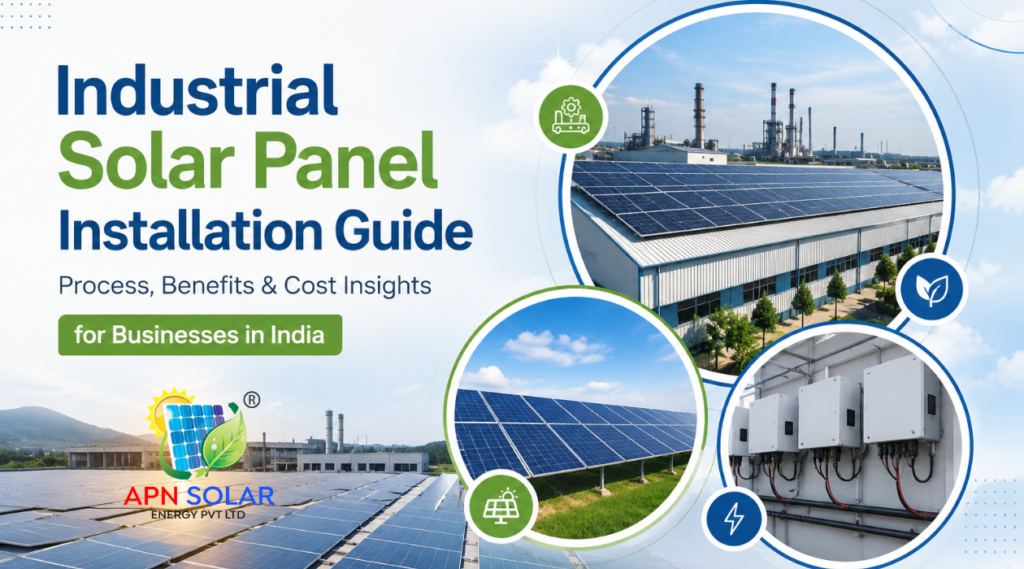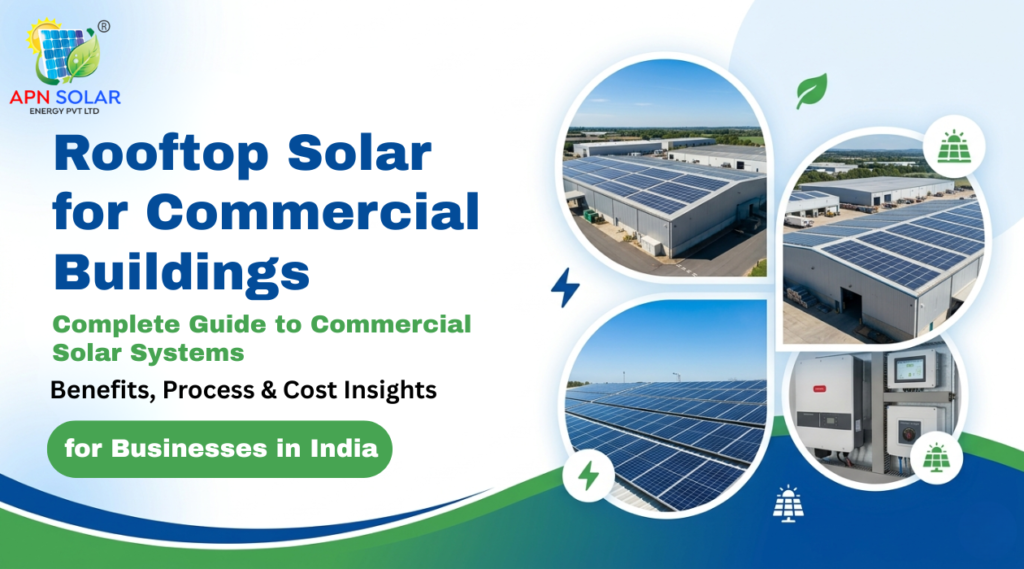
Businesses across India are rapidly adopting solar energy as rising electricity costs continue to increase operational expenses. Factories, warehouses, hotels, hospitals, offices, and retail spaces consume large amounts of electricity daily, driving strong demand for commercial solar systems.
Installing a solar power system for business operations helps companies reduce dependence on grid electricity while achieving long-term energy savings and sustainability goals. Among various renewable energy solutions, commercial rooftop solar has become one of the most cost-effective options for businesses.
By utilizing unused rooftop space, companies can generate clean electricity through rooftop solar panels in India and lower monthly power bills. Modern commercial solar power systems are designed for high energy efficiency, low maintenance, and long-term return on investment, making commercial solar a smart investment for businesses in India. As electricity prices continue to rise, many organizations are also exploring the benefits of switching to solar energy for businesses to improve long-term operational savings and sustainability.
What Is a Commercial Solar System?
A commercial solar system is designed to help businesses generate electricity using solar energy and reduce dependence on conventional grid power. These systems are widely used across commercial and industrial sectors to lower electricity costs and improve long-term energy efficiency.
Definition of Commercial Solar Systems
A commercial solar system is a solar energy setup designed for businesses, industries, and commercial establishments to generate electricity using sunlight. These systems are commonly installed on rooftops, industrial sheds, and open commercial spaces to reduce electricity costs and dependence on grid power.
Unlike residential setups, commercial solar systems are built to handle higher electricity consumption and large operational loads. Businesses planning large-scale installations should also understand the different types of solar panels in India to choose the right technology for commercial energy generation. Modern solar systems for commercial applications range from small office rooftop systems to large industrial solar plants that support factories, warehouses, shopping malls, and other high-energy commercial operations.
How Commercial Solar Power Systems Work
Commercial solar power systems generate electricity using photovoltaic (PV) solar panels that convert sunlight into direct current (DC) electricity. The solar inverter then converts this DC power into alternating current (AC) electricity, which is used to operate commercial equipment, lighting systems, machinery, and other electrical loads.
Most commercial solar electric systems are connected to the local electricity grid through net metering. Businesses installing grid-connected rooftop systems should also understand how net metering works in India to maximize electricity savings and energy credits. During the daytime, the solar system supplies electricity directly to the business. If excess electricity is generated, it can be exported to the grid, while additional power can be imported whenever solar production is insufficient.
A standard commercial solar setup generally includes:
- Solar panels for commercial use
- Solar inverter
- Mounting structure
- Net meter
- Monitoring system
These systems are designed for high efficiency, long operational life, and stable electricity generation for commercial operations.
Businesses That Use Commercial Solar
The adoption of commercial solar is increasing rapidly across multiple industries in India due to rising electricity costs and growing awareness of renewable energy benefits.
Businesses commonly using solar panels for commercial buildings include:
- Factories and manufacturing units
- Warehouses and logistics centers
- Hotels and resorts
- Hospitals
- Shopping malls
- Office complexes
- Educational institutions
In addition to commercial establishments, industrial solar installations are widely used in industries with high electricity consumption. Many businesses are adopting solar energy because solar panels help reduce electricity bills in India through long-term renewable energy savings. Large manufacturing facilities and industrial plants often invest in solar energy to reduce operational costs and improve long-term energy efficiency.
Why Businesses in India Are Switching to Commercial Solar
Businesses across India are increasingly investing in solar energy to reduce electricity costs, improve long-term profitability, and achieve sustainability goals. With rising power tariffs and growing awareness about renewable energy, commercial solar has become a practical and financially beneficial solution for commercial and industrial sectors.
Rising Electricity Costs & Long-Term Savings
Rising electricity tariffs have made energy costs a major expense for businesses across India. Industries, warehouses, hotels, factories, and offices with high power consumption are increasingly adopting commercial solar to reduce dependence on grid electricity and lower operational costs.
Most commercial solar projects offer strong long-term savings and recover their investment within a few years through reduced electricity bills. With a lifespan of over 25 years, solar commercial projects provide reliable and cost-effective energy for businesses.
Sustainability & Government Support
Businesses are also adopting commercial solar systems to achieve sustainability and ESG goals. Solar energy helps reduce carbon emissions, lower dependence on fossil fuels, and support environmentally responsible operations.
Government policies, net metering benefits, and incentives have further accelerated the adoption of rooftop solar panels in India. As a result, commercial rooftop solar installations are rapidly growing across factories, offices, warehouses, hospitals, and other commercial buildings.
Types of Commercial Solar Systems
Commercial solar systems are available in different configurations based on business energy requirements, grid availability, and backup power needs. Choosing the right system depends on factors such as electricity consumption, operational hours, location, and long-term business goals.
On-Grid Commercial Solar System
An on-grid commercial solar system is connected to the local electricity grid and is the most commonly used setup for businesses in India. These commercial solar power systems generate electricity during the daytime and directly supply power to offices, factories, warehouses, hotels, and commercial buildings.
A major advantage of commercial rooftop solar is net metering, which allows businesses to export excess electricity to the grid and reduce electricity bills further. Before selecting a system, businesses should also compare on-grid vs off-grid solar systems based on their operational energy requirements. Since on-grid systems do not require batteries, they are more affordable, low-maintenance, and offer faster return on investment.
Businesses suitable for this setup include:
- Manufacturing units
- Commercial office buildings
- Hospitals
- Educational institutions
- Warehouses
- Retail complexes
Most large-scale commercial solar installation projects in India use on-grid systems due to their cost-effectiveness and reliable performance.
Off-Grid Commercial Solar System
An off-grid solar system operates independently without relying on the utility grid. These systems use battery storage to store excess solar electricity generated during the daytime for later use during nighttime or power outages.
Off-grid solar systems for commercial applications are commonly used in remote locations where grid connectivity is unavailable or unreliable. Businesses operating in remote areas can also explore the benefits of an off-grid solar system for commercial use for uninterrupted power supply and energy independence. They are also suitable for businesses that require uninterrupted electricity supply in areas with frequent power cuts.
Commercial solar electric systems with battery backup are capable of providing stable power for essential commercial operations, machinery, lighting, and equipment.
applications include:
- Remote industrial facilities
- Agricultural processing units
- Rural commercial establishments
- Telecom infrastructure
- Isolated warehouses
Although off-grid systems involve higher installation costs due to battery storage requirements, they provide complete energy independence and reliable backup power support.
Hybrid Commercial Solar System
A hybrid commercial solar system combines solar panels, battery storage, and grid connectivity to provide uninterrupted power supply and better energy management. Organizations requiring backup power support should also understand how a hybrid solar system works for commercial and industrial applications. These commercial solar systems automatically switch between solar energy, batteries, and grid electricity based on business energy consumption.
A hybrid solar power system for business operations is ideal for organizations that require reliable backup power while reducing electricity costs and dependence on conventional energy sources.
Hybrid systems are commonly used in:
- Hospitals
- Data centers
- IT companies
- Manufacturing plants
- Hotels
- Commercial buildings with critical operations
With smart energy management and backup support, hybrid systems provide better energy reliability along with long-term operational savings.
Commercial Rooftop & Industrial Solar Applications
Commercial and industrial sectors are among the largest consumers of electricity in India, making solar energy a highly practical solution for reducing operational costs and improving energy efficiency. With advancements in solar technology and increasing electricity tariffs, businesses are rapidly adopting rooftop and industrial solar solutions.
Commercial Rooftop Solar
Commercial rooftop solar systems are installed on offices, malls, hospitals, hotels, and other commercial buildings to generate electricity using unused rooftop space. These systems help businesses reduce dependence on grid electricity and lower operational costs.
Modern roof top solar panels require minimal maintenance and are commonly connected through net metering, allowing businesses to export excess electricity to the grid. Regular solar panel cleaning and maintenance also helps commercial rooftop systems maintain higher efficiency and long-term energy generation.. A rooftop photovoltaic power station is one of the most cost-effective renewable energy solutions for businesses with high daytime electricity consumption.
Industrial Solar Systems
Industrial solar solutions are designed for factories, warehouses, manufacturing plants, and other energy-intensive facilities. Since industries consume large amounts of electricity, installing industrial solar systems helps reduce operational costs and improve long-term energy efficiency.
Large rooftops in industrial facilities are ideal for installing industrial solar panels and industrial solar rooftop systems for high-capacity electricity generation. Businesses planning large-scale projects should also learn about solar panel requirement calculation for commercial buildings to estimate rooftop space and system capacity accurately. In large-scale operations, these installations can function as a commercial solar power plant, reducing dependence on grid electricity and diesel generators.
Benefits of Rooftop & Industrial Solar
Installing solar panels for commercial use provides several financial and operational advantages for businesses and industries.
benefits include:
- Significant reduction in electricity bills
- Better energy independence
- Lower operational costs
- Reduced carbon emissions
- Improved sustainability goals
- Long-term return on investment
Businesses using solar panels for commercial buildings also benefit from predictable energy costs and reduced exposure to rising electricity tariffs.
As energy prices continue to increase, more organizations are investing in commercial solar systems and commercial solar projects to improve profitability, operational stability, and long-term business sustainability.
Components of Commercial Solar Power Systems
Commercial solar power systems consist of several important components that work together to generate, convert, and manage electricity efficiently for business operations. The performance, durability, and energy output of a solar system largely depend on the quality and proper integration of these components.
Major Components
Commercial Solar Panels
Commercial solar panels are the primary component responsible for converting sunlight into electricity. Businesses investing in large-scale solar projects should also compare PERC vs TOPCon vs HJT solar panels to select high-efficiency technology for long-term commercial performance. These panels are designed to handle large-scale energy generation and are commonly installed on factory roofs, warehouses, office buildings, and industrial sheds. High-efficiency commercial solar panels help businesses maximize electricity generation while optimizing rooftop space utilization.
Solar Inverter
The solar inverter converts direct current (DC) electricity generated by the panels into alternating current (AC) electricity used by commercial equipment and machinery. In commercial solar power systems, inverters play a critical role in maintaining stable energy output and overall system efficiency.
Mounting Structure
The mounting structure supports and secures solar panels on rooftops or ground-mounted installations. A strong mounting system is essential for long-term safety, structural stability, and optimal panel positioning. In large-scale commercial solar installation projects, durable mounting systems are especially important for handling environmental conditions and maximizing solar exposure.
Net Meter
A net meter measures the electricity imported from and exported to the utility grid. It is an important component in grid-connected systems and helps businesses receive net metering benefits by tracking excess electricity generated through the project solar roof setup.
Monitoring System
A solar monitoring system tracks electricity generation, system performance, and operational efficiency in real time. Modern commercial rooftop systems are increasingly using smart solar monitoring systems in India for better energy tracking and maintenance management. It helps businesses monitor the performance of their rooftop photovoltaic power station and quickly identify any technical issues or generation losses.
Commercial Solar Panel Cost in India
The cost of a commercial solar system in India depends on multiple factors such as system capacity, solar technology, rooftop conditions, and installation requirements. Businesses investing in solar energy should evaluate both the initial installation cost and the long-term savings potential before selecting a system.
Factors Affecting Commercial Solar Cost
The commercial solar panel cost mainly depends on system size, solar technology, roof structure, and installation complexity. Larger systems require higher initial investment but usually provide better long-term savings and lower per-kW costs.
The use of high-efficiency solar panels, complex rooftop layouts, shadow issues, or additional structural support can also increase commercial solar installation costs.
Other factors influencing commercial solar installation cost include:
- Type and quality of solar inverter
- Mounting structure design
- Net metering requirements
- Electrical infrastructure upgrades
- Installation complexity
- Location of the project
Although the initial investment may vary, commercial solar systems generally provide strong long-term return on investment through reduced electricity expenses and lower operational costs.
Commercial Solar System Cost by Capacity
The cost of a commercial solar power plant depends largely on the required system capacity and electricity consumption of the business.
| System Capacity | Approximate Cost Range | Approximate Rooftop Area | Average Payback Period |
| 10 kW | ₹5–7 Lakhs | 700–1,000 sq. ft. | 4–5 Years |
| 25 kW | ₹12–16 Lakhs | 1,800–2,500 sq. ft. | 4–5 Years |
| 50 kW | ₹22–30 Lakhs | 3,500–5,000 sq. ft. | 3–5 Years |
| 100 kW | ₹40–60 Lakhs | 7,000–10,000 sq. ft. | 3–5 Years |
| 250 kW Solar Power Plant Cost | ₹90 Lakhs–₹1.5 Crore | 18,000–25,000 sq. ft. | 3–4 Years |
The 250 kw solar power plant cost varies depending on panel quality, rooftop design, inverter technology, and project location. Large-scale systems are commonly installed in factories, industrial plants, warehouses, and manufacturing facilities with high electricity consumption.
Most commercial solar systems in India have an operational lifespan of more than 25 years, allowing businesses to achieve substantial long-term electricity savings after recovering the initial investment.
Commercial Solar Installation Process & ROI
Installing a commercial solar system involves multiple technical and planning stages to ensure maximum energy generation, long-term performance, and financial savings. A properly designed solar project can significantly reduce electricity costs while delivering strong return on investment for businesses.
Commercial Solar Installation Process
Commercial solar installation begins with analyzing the business’s electricity consumption to determine the required system capacity. Businesses adopting solar energy for the first time can also understand the complete solar panel installation process in India before starting a commercial rooftop project. A detailed site survey is then conducted to evaluate rooftop conditions, shadow analysis, and electrical infrastructure for efficient system design.
After finalizing the design, engineers install mounting structures, wiring, inverters, and commercial solar panels. For grid-connected systems, net metering approval is obtained before testing and commissioning the system. Proper execution is essential for commercial rooftop solar and large-scale solar commercial projects to ensure long-term performance and reliability.
ROI & Payback Period
One of the biggest advantages of investing in commercial solar systems is the strong long-term return on investment. Most businesses recover their solar investment within approximately 3 to 5 years through electricity bill savings.
The ROI of a solar power system for business operations depends on several factors, including:
- Electricity tariff rates
- System size
- Daily energy consumption
- Solar generation capacity
- Roof conditions
- Quality of components
After the payback period, businesses continue generating low-cost electricity for more than 20 years, making commercial solar projects a highly profitable long-term investment for commercial and industrial operations.
Government Policies for Commercial Solar in India
Government policies and regulatory support have played a major role in accelerating the adoption of solar energy across commercial and industrial sectors in India. Various incentives and renewable energy initiatives are encouraging businesses to invest in solar power and reduce dependence on conventional electricity sources.
Commercial Solar Policies & Incentives
Net metering is one of the key policies supporting commercial rooftop solar adoption in India. Businesses planning large commercial systems should also understand the difference between net metering vs gross metering before applying for grid connectivity approvals. It allows businesses to export excess electricity to the grid and receive credits on electricity bills, improving savings from rooftop solar panels in India.
Businesses can also benefit from accelerated depreciation, which helps reduce the effective cost of commercial solar power systems through tax benefits. In addition, commercial solar projects require DISCOM approvals for grid connectivity and net metering, with regulations varying across states.
Several state governments are actively promoting solar systems for commercial applications through renewable energy policies and simplified approval processes.
How to Choose the Right Commercial Solar Company
Selecting the right solar company is important for ensuring long-term performance, safety, and return on investment from a commercial solar project. Businesses should also learn how to choose the best solar company in India based on experience, certifications, installation quality, and after-sales support. Since commercial solar systems involve significant investment and technical planning, businesses should evaluate the expertise and reliability of the solar provider carefully.
Important Factors to Consider
Businesses should choose companies with experience in handling commercial solar projects across different industries and system sizes. An experienced installer can ensure efficient system design, quality commercial solar installation, and reliable long-term performance.
The quality of commercial solar panels, inverters, and certified industrial solar panels also plays a major role in system efficiency and lifespan. Businesses should additionally evaluate engineering expertise, maintenance support, warranty coverage, and the company’s previous project portfolio before making a decision.
Why Businesses Choose APN Solar
Many businesses prefer APN Solar as best solar company in India for customized commercial and industrial solar solutions designed according to specific operational energy requirements. The company provides complete support from site assessment and system design to installation and maintenance.
With expertise in commercial rooftop solar and large-scale industrial solar solutions, APN Solar focuses on delivering efficient, reliable, and long-term solar energy systems for factories, warehouses, offices, hospitals, and commercial establishments across India.
Future of Commercial Solar Systems in India
The adoption of commercial rooftop solar is growing rapidly in India as businesses look for cost-effective and sustainable energy solutions. Rising electricity costs, supportive government policies, and growing environmental awareness continue to drive demand for commercial solar systems and industrial solar installations.
Modern solar technology also improves the efficiency of commercial solar electric systems through high-efficiency panels, smart monitoring systems, and advanced inverters. Emerging technologies like TOPCon solar panels in India are helping businesses achieve higher efficiency and better long-term electricity generation. Growing renewable energy targets will make commercial solar a major long-term energy solution for businesses across India.
Conclusion
Investing in a commercial solar system is a smart long-term solution for businesses looking to reduce electricity costs and improve energy efficiency. Commercial solar systems help offices, factories, warehouses, and commercial buildings achieve long-term savings while reducing dependence on conventional power sources.
With the rapid growth of commercial rooftop solar in India, more businesses are adopting renewable energy for sustainability and operational savings. Companies planning large-scale installations should partner with a trusted solar company in India to ensure proper system design, installation quality, and long-term project performance. Choosing the right solar provider is essential to ensure proper installation, reliable performance, and maximum return from a solar power system for business operations.
Frequently Asked Questions
1. What is a commercial solar system?
A commercial solar system is a solar power setup designed for businesses, industries, offices, warehouses, hotels, hospitals, and other commercial establishments. These systems generate electricity using solar energy to reduce dependence on grid power and lower long-term electricity expenses.
2. How much does a commercial solar system cost in India?
The commercial solar panel cost in India depends on factors such as system size, solar technology, rooftop structure, and installation complexity. Small commercial systems may start from a few lakhs, while large industrial installations can cost significantly more depending on capacity and energy requirements.
3. What is commercial rooftop solar?
Commercial rooftop solar refers to solar systems installed on the rooftops of commercial buildings to generate electricity for business operations. These systems help businesses utilize unused roof space efficiently while reducing electricity bills through renewable energy generation.
4. Is commercial solar profitable for businesses?
Yes, commercial solar projects are considered highly profitable for businesses with high electricity consumption. Most businesses recover their investment within 3 to 5 years through electricity savings, after which the system continues generating low-cost electricity for many years.
5. What is the lifespan of commercial solar panels?
Most high-quality commercial solar panels have an operational lifespan of approximately 25 years or more. With proper maintenance and regular monitoring, solar systems can continue generating electricity efficiently for decades.
6. How much rooftop space is required for commercial solar?
The rooftop area required depends on system capacity and panel efficiency. On average, a commercial system may require around 80–100 square feet per kW. Large industrial solar rooftop projects require significantly more installation area for higher-capacity systems.
7. What is the 250 kW solar power plant cost?
The 250 kw solar power plant cost in India generally ranges from around ₹90 lakhs to ₹1.5 crore depending on panel quality, inverter technology, rooftop conditions, and installation requirements. Large-scale systems are commonly used in factories, warehouses, and manufacturing facilities with high electricity consumption.