A solar battery is an energy storage device that stores excess electricity generated by solar panels for use during the night, cloudy weather, or power outages. As electricity tariffs continue to rise across many parts of India and grid reliability remains a concern in certain regions, investing in the best solar battery in India has become an important consideration for homeowners looking to maximize the benefits of solar energy.
The rapid growth of rooftop solar installations, supported by initiatives such as the PM Surya Ghar Muft Yojana, has further increased the demand for reliable solar energy storage solutions. Today, homeowners can choose from various battery technologies, including lithium-ion solar batteries known for their high efficiency and long lifespan, and lead-acid solar batteries, which offer a lower upfront cost.
Choosing the best solar battery depends on factors such as energy consumption, backup requirements, budget, and system size. Trusted solar providers like APN Solar help homeowners evaluate these factors and select suitable solar storage solutions for long-term performance and energy independence.
What Is a Solar Battery and How Does It Work?
A solar battery is a storage device that captures and stores excess electricity generated by a solar power system for later use. In simple terms, a solar panel battery allows homeowners to use solar energy even when sunlight is unavailable, such as during the night, cloudy weather, or grid power outages.
When solar panels generate electricity during the day, the energy is first used to power household appliances. Any surplus electricity that is not immediately consumed can be stored in the solar battery system instead of being exported to the grid. Understanding how rooftop solar systems generate and manage electricity is essential for maximizing battery performance. This stored energy becomes available whenever the solar panels are not producing enough power.
The operation of a solar power battery involves two key processes: charging and discharging. During the charging cycle, excess solar energy is converted and stored inside the battery. During the discharging cycle, the battery releases the stored energy to run household loads when required. Modern lithium-ion solar batteries can achieve high charging efficiency and thousands of charge-discharge cycles, making them suitable for long-term residential use.
A solar battery also acts as a backup power source during grid failures. If there is a power cut, the system can automatically switch to stored battery energy, ensuring that essential appliances such as lights, fans, Wi-Fi routers, and refrigerators continue operating.
Components of a Solar Battery System
A complete solar battery system consists of several interconnected components:
| Component | Function |
| Solar Panels | Convert sunlight into electricity. |
| Solar Inverter | Converts DC electricity into usable AC electricity for household appliances. |
| Battery Bank | Stores excess solar energy for later use. |
| Monitoring System | Tracks energy generation, battery charge levels, and overall system performance. |
For example, a 5 kW rooftop solar system generating around 20–25 units of electricity per day can store surplus energy in a battery bank, allowing homeowners to use clean solar power even after sunset. This combination of solar panels, inverter, and battery storage helps improve energy independence while reducing reliance on grid electricity.
Why Do Homeowners Need Solar Batteries?
Solar batteries for home are becoming increasingly important as homeowners look for reliable power backup, lower electricity costs, and greater energy independence. While solar panels generate electricity during daylight hours, a solar battery backup system stores excess energy for use whenever solar production is low or unavailable. This helps households make better use of their solar investment while ensuring uninterrupted access to electricity.
Power Backup During Outages
One of the biggest advantages of a solar battery backup is protection against power cuts. In many Indian cities and rural areas, grid interruptions can affect daily activities, especially during peak summer demand or severe weather conditions.
For example, a homeowner with a rooftop solar system and battery storage can continue running essential appliances such as LED lights, ceiling fans, Wi-Fi routers, televisions, and refrigerators even when the grid is down. This makes a battery-backed solar system particularly valuable for families working from home or students attending online classes.
Better Energy Independence
A battery allows homeowners to rely less on the utility grid by storing excess solar energy generated during the day. Instead of purchasing electricity from the grid during evening hours, stored solar power can be used to meet household energy needs.
This increased self-consumption helps improve energy security and reduces exposure to rising electricity tariffs. Homeowners can further improve savings by understanding how solar energy offsets household electricity consumption throughout the year.
Reduced Electricity Bills
A properly sized solar battery backup system can help reduce electricity expenses by shifting energy usage from costly grid power to stored solar energy. Homes with higher evening consumption often benefit the most because they can utilize solar energy long after sunset.
Improved Solar Energy Utilization
Without battery storage, unused solar electricity may be exported to the grid or go unused depending on the system configuration. The best home battery helps capture this surplus energy and store it for later use.
For instance, a household with a 5 kW rooftop solar system may generate more electricity than it consumes during the afternoon. A solar battery stores this excess energy, allowing the family to power appliances during the evening and night using clean renewable energy rather than grid electricity. This improves overall system efficiency and maximizes the value of the solar installation.
Types of Solar Batteries Available in India
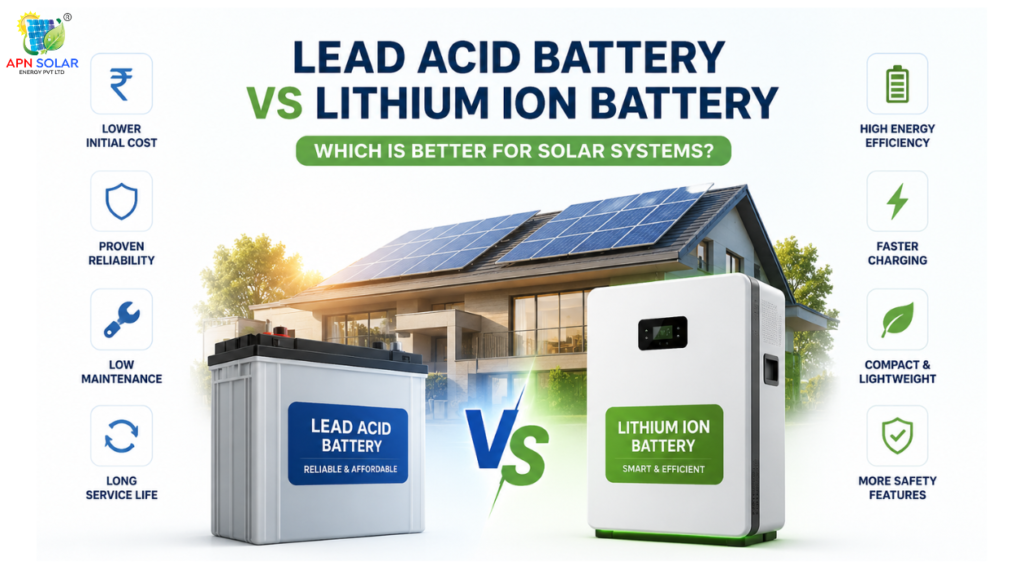
The types of solar batteries available in India primarily fall into two categories: lead-acid solar batteries and lithium-ion solar batteries. Both technologies are widely used in residential and commercial solar installations, but they differ significantly in terms of efficiency, lifespan, maintenance requirements, and long-term value.
Choosing the right battery depends on factors such as budget, backup requirements, available installation space, and expected system lifespan. Battery selection should also align with the type of solar system installed at your property. Understanding the strengths and limitations of each technology can help homeowners make an informed investment decision.
Comparison of Solar Battery Types
| Feature | Lead-Acid Solar Battery | Lithium-Ion Solar Battery |
| Initial Cost | Lower | Higher |
| Lifespan | 3–7 Years | 10–15+ Years |
| Charging Speed | Moderate | Fast |
| Efficiency | 70–85% | 90–98% |
| Maintenance | Regular | Minimal |
| Depth of Discharge (DoD) | 50–60% | 80–95% |
| Space Requirement | Larger | Compact |
| Long-Term ROI | Moderate | High |
| Best For | Budget-conscious users | Long-term solar investments |
Lead-Acid Solar Batteries
A lead acid solar battery has been used in solar power systems for decades and remains a popular option due to its affordability and proven reliability. These batteries are commonly found in residential backup systems and off-grid solar installations across India.
One of the biggest advantages of lead-acid batteries is their lower upfront cost compared to lithium-based alternatives. This makes them attractive for homeowners with limited budgets or those seeking basic backup functionality.
A common variant is the solar tubular battery, which is specifically designed for deep-cycle applications and frequent charging and discharging. Tubular batteries generally offer better durability and performance than flat-plate lead-acid batteries.
However, lead-acid batteries require periodic maintenance, including checking electrolyte levels and ensuring proper ventilation. They also have a shorter lifespan and lower usable storage capacity compared to newer battery technologies.
Lithium-Ion Solar Batteries
A lithium ion solar battery is considered the most advanced battery technology currently available for residential solar energy storage. Due to their high efficiency, compact design, and long service life, lithium solar batteries are becoming increasingly popular among Indian homeowners.
Lithium batteries can typically achieve efficiency levels of 90–98%, meaning more of the stored energy can be used by the household. They also support deeper discharge cycles, allowing users to access a larger percentage of the battery’s capacity without affecting performance.
Another major advantage is faster charging. For example, excess electricity generated by a rooftop solar system during peak sunlight hours can be stored quickly and efficiently for evening use.
Unlike lead-acid batteries, lithium batteries require very little maintenance and often come with warranties ranging from 8 to 15 years, depending on the manufacturer and battery chemistry.
Which Solar Battery Type Is Better?
There is no one-size-fits-all answer because the best battery depends on the application and budget.
For homeowners seeking a lower initial investment and occasional backup power, a solar tubular battery or other lead-acid option may be sufficient. These batteries continue to serve many residential users effectively when maintained properly.
For modern homes with higher energy consumption, frequent power outages, or long-term solar investment goals, a lithium ion solar battery generally delivers better performance. Its higher efficiency, longer lifespan, faster charging capability, and lower maintenance requirements often result in a stronger long-term return on investment.
Commercial facilities and businesses also increasingly prefer lithium battery storage because of its ability to handle frequent cycling and support larger solar energy systems efficiently. While the upfront cost is higher, the extended lifespan and reduced maintenance expenses often make lithium batteries the more economical choice over the lifetime of the system.
Best Solar Battery Technologies for Home Solar Systems
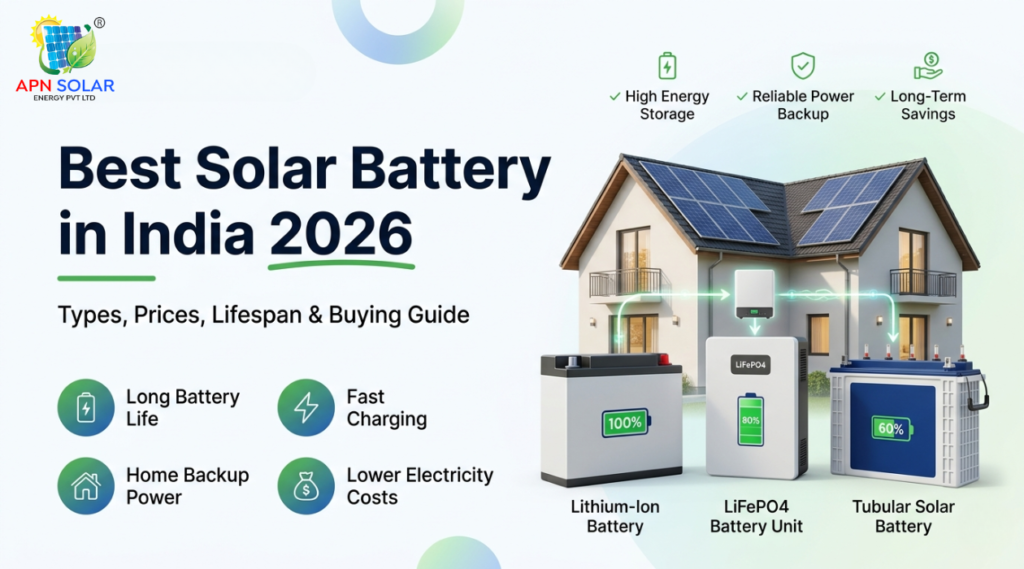
The best battery for solar panel systems depends on your budget, energy consumption, backup requirements, and long-term goals. While several battery technologies are available in the market, most residential solar installations in India rely on Lithium Iron Phosphate (LiFePO4), lithium-ion batteries, or tubular batteries. Each technology offers different advantages in terms of efficiency, lifespan, safety, and overall value.
For homeowners looking for the best long-term investment, lithium-based technologies generally outperform traditional battery options due to their higher efficiency and longer service life. These advanced batteries are increasingly being paired with modern high-efficiency solar panel technologies.
Lithium Iron Phosphate (LiFePO4)
LiFePO4 batteries are widely considered the best lithium battery technology for modern residential solar systems. They offer excellent thermal stability, making them one of the safest battery options available.
Key advantages include:
- Cycle life of 4,000–7,000+ charge-discharge cycles
- High efficiency of approximately 95–98%
- Low risk of overheating
- Minimal maintenance requirements
- Typical warranty of 8–15 years
Although the upfront cost is higher, the longer lifespan and lower maintenance costs often result in superior long-term value. For homeowners planning to stay in their property for many years, LiFePO4 batteries can provide excellent return on investment.
Lithium-Ion Batteries
Standard lithium ion batteries for solar panels are another popular choice due to their compact design, fast charging capabilities, and high energy density.
Benefits include:
- Efficiency ranging from 90–98%
- Faster charging and discharging
- Compact installation footprint
- Longer lifespan than lead-acid batteries
- Lower maintenance compared to conventional batteries
Many homeowners searching for the best lithium ion battery choose lithium-ion technology because it maximizes solar energy utilization while requiring less space than traditional battery banks.
Tubular Batteries
Tubular batteries are a specialized type of lead-acid battery commonly used in Indian residential backup systems. They remain a practical option for budget-conscious homeowners.
Advantages include:
- Lower upfront investment
- Proven and widely available technology
- Suitable for moderate backup requirements
- Warranty typically ranging from 3–5 years
However, tubular batteries generally offer fewer charge cycles, lower efficiency, and higher maintenance requirements than lithium batteries for solar panels.
Quick Technology Comparison
| Feature | LiFePO4 Battery | Lithium-Ion Battery | Tubular Battery |
| Cycle Life | 4,000–7,000+ | 2,000–5,000 | 1,000–2,000 |
| Efficiency | 95–98% | 90–98% | 70–85% |
| Safety | Excellent | Very Good | Good |
| Maintenance | Minimal | Minimal | Regular |
| Warranty | 8–15 Years | 5–12 Years | 3–5 Years |
| Cost Effectiveness | Excellent Long-Term | Very Good | Better Initial Cost |
For most modern rooftop solar installations, LiFePO4 and advanced lithium-ion technologies offer the best balance of efficiency, reliability, and long-term savings. However, homeowners with limited budgets may still find tubular batteries to be a practical solution for basic solar backup needs.
How to Choose the Best Solar Battery in India
Choosing the best solar battery in India involves more than comparing prices. The right battery should match your household’s energy consumption, backup requirements, solar system size, and long-term budget. Since a battery is one of the most important components of a solar power system, evaluating key technical factors can help homeowners maximize performance, reliability, and return on investment.
1. Battery Capacity
Battery capacity determines how much electricity can be stored and used later. It is usually measured in Ampere-hours (Ah) or kilowatt-hours (kWh).
- Ah (Ampere-hour): Indicates how much current a battery can supply over a specific period.
- kWh (Kilowatt-hour): Measures the actual amount of usable energy stored in the battery.
For example, a battery rated at 48V and 100Ah provides approximately:
48V × 100Ah = 4,800Wh = 4.8 kWh
A household consuming 8–10 units of electricity during evening hours may require significantly larger solar battery storage capacity than a home with minimal nighttime consumption.
2. Depth of Discharge (DoD)
Depth of Discharge (DoD) refers to the percentage of a battery’s stored energy that can be safely used before recharging.
| Battery Type | Typical DoD |
| Lead-Acid Battery | 50–60% |
| Lithium-Ion Battery | 80–95% |
A higher DoD means more usable energy from the same battery capacity. This is one reason why modern solar energy storage batteries based on lithium technology often provide better overall value.
3. Battery Efficiency
Efficiency indicates how much stored electricity can actually be used after accounting for charging and discharging losses.
- Lead-acid batteries: 70–85% efficiency
- Lithium-ion batteries: 90–98% efficiency
Higher efficiency translates into better utilization of solar energy and reduced dependence on grid electricity.
4. Warranty Period
A battery warranty provides insight into the manufacturer’s confidence in product performance and longevity.
When comparing batteries, look for:
- Product warranty duration
- Performance warranty terms
- Cycle life guarantees
- Replacement conditions
Many premium lithium batteries now offer warranties ranging from 8 to 15 years, while most lead-acid batteries generally carry shorter warranty periods.
5. Scalability
Future energy requirements should also be considered when selecting a battery system.
For example, a homeowner installing a 3 kW solar system today may later upgrade to:
- Additional solar panels
- Electric vehicle charging
- Higher household electricity consumption
Choosing scalable solar battery storage solutions allows capacity expansion without replacing the entire battery system.
6. Brand Reputation
The quality of the battery manufacturer and installation partner can significantly impact long-term performance.
Before purchasing, evaluate:
- Product certifications and safety standards.
- Warranty support and after-sales service.
- Customer reviews and installation track record.
- Availability of technical support and spare parts.
Homeowners should also work with experienced solar companies such as APN Solar to properly size solar energy storage batteries according to actual consumption patterns, backup requirements, and future energy needs. Choosing the right installation partner is equally important for long-term system performance. Proper system design helps avoid under-sizing or over-investing in battery capacity.
By carefully assessing capacity, DoD, efficiency, warranty, scalability, and brand reliability, homeowners can confidently select the best solar battery in India for long-term energy security and maximum value from their solar investment.
Solar Battery Capacity Guide for Indian Homes
Choosing the right solar battery storage capacity is essential for maximizing the performance of your solar power system. A battery that is too small may not provide sufficient backup during power outages, while an oversized battery can increase installation costs unnecessarily. The ideal battery size depends on factors such as daily electricity consumption, the number of appliances used during outages, backup duration requirements, and the size of the rooftop solar system.
As a general guideline, homeowners can use the following battery capacity recommendations:
| Home Type | Recommended Battery Size |
| 1 BHK | 2–5 kWh |
| 2 BHK | 5–10 kWh |
| 3 BHK | 10–15 kWh |
| Large Home | 15+ kWh |
For example, a typical 1 BHK apartment using essential loads such as lights, fans, a television, and a Wi-Fi router may only require 2–5 kWh of solar battery storage. In contrast, a larger home running multiple air conditioners, refrigerators, pumps, and other appliances may need a battery bank exceeding 15 kWh.
It is important to note that these figures are only estimates. Actual solar batteries for home should be selected based on individual energy consumption patterns and backup expectations. A household consuming 12–15 units of electricity during evening hours will require a larger solar battery system than a home with minimal nighttime usage.
To ensure optimal performance and cost efficiency, homeowners should perform a detailed load assessment before choosing a battery capacity for their solar installation. This assessment becomes easier when you first calculate your home’s solar energy requirements accurately.
Solar Battery Price in India: What Should You Expect?
The cost of a solar battery in India can vary significantly depending on the battery technology, storage capacity, warranty coverage, brand reputation, and installation requirements. While price is an important factor, homeowners should also evaluate efficiency, lifespan, and long-term operating costs when comparing different solar battery storage options.
In general, lithium-based batteries have a higher upfront cost but offer better efficiency and a longer service life. Lead-acid and tubular batteries are more affordable initially but may require replacement sooner and involve higher maintenance over time.
Approximate Solar Battery Price Range in India
| Battery Type | Approximate Price Range |
| Lead Acid | ₹10,000 – ₹35,000 |
| Tubular | ₹15,000 – ₹50,000 |
| Lithium-Ion | ₹40,000 – ₹2,50,000+ |
Prices are indicative and may vary depending on capacity, brand, city, warranty terms, and installation requirements.
Factors That Influence Solar Battery Prices
1. Battery Chemistry
Battery technology has the biggest impact on cost. A lithium battery for solar system applications generally costs more than lead-acid alternatives because it offers higher efficiency, deeper discharge capability, and a longer operational lifespan.
2. Storage Capacity
Larger batteries can store more energy and provide longer backup durations. For example, a 10 kWh battery system will naturally cost more than a 5 kWh system due to its increased storage capacity. Homeowners often evaluate battery costs alongside the overall investment required for a residential solar system.
3. Warranty Coverage
Batteries with longer warranties often have higher upfront costs. Premium lithium batteries may include warranties of 8–15 years, while many lead-acid batteries typically offer shorter coverage periods.
4. Brand and Product Quality
Established manufacturers often invest more in safety systems, battery management technology, and after-sales support, which can influence pricing.
5. Installation and System Integration
The total project cost may also include mounting structures, wiring, inverter compatibility upgrades, battery management systems (BMS), and installation labor.
When evaluating solar battery storage solutions, homeowners should focus on the total lifetime value rather than the initial purchase price alone. A battery with higher efficiency, longer lifespan, and lower maintenance requirements may deliver better long-term savings despite a higher upfront investment.
Conclusion
Choosing the best solar battery in India is a crucial decision that directly impacts the performance, reliability, and long-term value of a solar power system. The right solar battery not only provides backup power during outages but also helps homeowners maximize self-consumption of solar energy and reduce dependence on grid electricity.
While lead-acid and tubular batteries remain viable options for budget-conscious users, lithium-based technologies generally offer superior long-term value due to their higher efficiency, longer lifespan, faster charging capabilities, and lower maintenance requirements. However, the ideal battery choice depends on individual energy needs and financial considerations.
Before investing in solar batteries for home, homeowners should carefully evaluate battery capacity, depth of discharge, efficiency, warranty coverage, expected lifespan, and overall budget. A properly sized battery system can significantly improve energy independence and return on investment.
For the best results, it is advisable to consult experienced solar professionals such as APN Solar, who can help design residential solar solutions that align with your energy consumption patterns, backup requirements, and long-term sustainability goals. Working with a trusted solar brand in India can also help ensure quality equipment, professional installation, and reliable after-sales support.
Frequently Asked Questions
1. Which is the best solar battery in India for home use?
The best solar battery in India for home use is typically a lithium-based battery, especially LiFePO4 technology. These batteries offer high efficiency, longer lifespan, faster charging, and minimal maintenance. The ideal choice depends on your daily electricity consumption, backup requirements, budget, and solar system size.
2. Are lithium-ion batteries better than lead-acid solar batteries?
In most cases, a lithium ion solar battery performs better than a lead acid solar battery because it offers higher efficiency, deeper discharge capability, longer lifespan, and lower maintenance. Although lithium batteries have a higher upfront cost, they often provide better long-term value and lower replacement expenses.
3. How long does a solar battery last?
The lifespan of a solar battery depends on its technology, usage patterns, and maintenance. Lead-acid batteries typically last 3–7 years, while lithium solar batteries can last 10–15 years or more. Factors such as depth of discharge, charging cycles, and operating conditions also affect battery longevity.
4. What size solar battery do I need for my home?
The size of solar batteries for home depends on your daily energy consumption and backup needs. Small apartments may require 2–5 kWh of storage, while larger homes may need 10–15 kWh or more. A detailed load assessment helps determine the most suitable battery capacity.
5. Can solar batteries work during power cuts?
Yes, a properly configured solar battery backup system can supply electricity during power outages. When grid power fails, the battery automatically provides stored energy to essential appliances such as lights, fans, refrigerators, and internet routers, ensuring uninterrupted power for critical household needs.
6. How much does a solar battery cost in India?
The cost of solar battery storage in India varies based on battery type, capacity, warranty, and brand. Lead-acid batteries are generally more affordable, while lithium batteries have higher upfront costs. Most residential solar battery systems can range from tens of thousands to several lakhs of rupees.
7. Which battery technology is best for solar energy storage?
For most residential applications, lithium-based solar energy storage batteries are considered the best option. Modern LiFePO4 and lithium batteries for solar panels offer excellent efficiency, long cycle life, enhanced safety, and low maintenance, making them ideal for long-term solar energy storage and backup applications.