
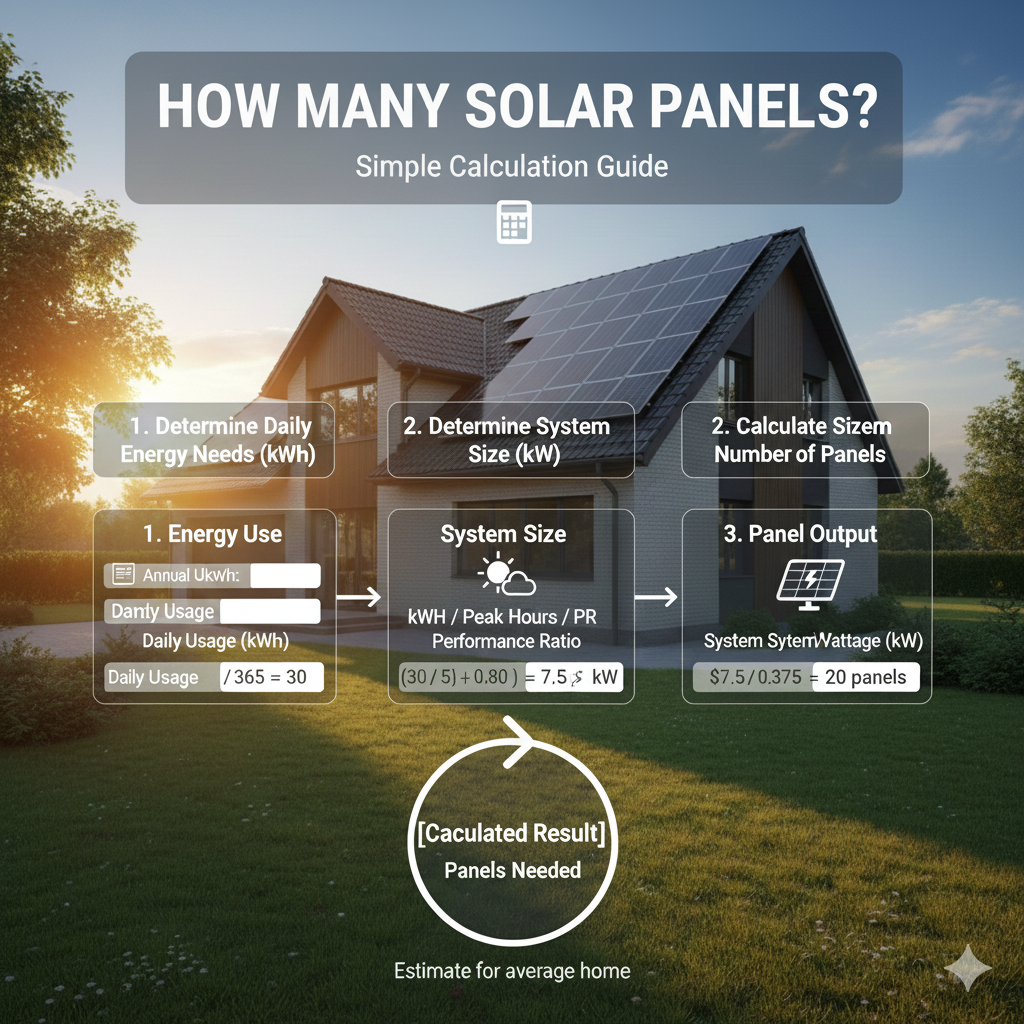
The demand for solar panels for home in India has surged as more families look for long-term savings, energy independence, and protection from rising electricity bills. But before installing a system, the most important step is knowing how much solar panel is required for your home based on your actual energy usage.
Accurate solar system sizing ensures you get the right number of panels, the right capacity, and maximum return on investment. A properly calculated setup prevents underperformance, prevents overspending, and helps you get the ideal solar system for your house without wasting roof space or money.
Because every home’s electricity consumption is different, expert guidance becomes crucial. This is where APN Solar, one of India’s trusted solar advisors, helps homeowners with scientific load analysis, rooftop evaluation, and customized solar recommendations for efficient power generation and long-term savings.
A well-sized solar system not only reduces bills but guarantees optimal performance for 25+ years and this guide will make the calculation simple for you.
Check Your Home’s Electricity Consumption
Understanding your monthly electricity usage is the first and most important step in calculating how much kilowatt is required for your home. Solar sizing depends directly on how many units (kWh) you consume every month. The higher your usage, the larger the solar system for your house needs to be.
How to Read Your Electricity Bill (Units/kWh)
Most electricity bills in India clearly show the total units consumed, measured in kWh (kilowatt-hour). This number tells you how much electricity your home used during the billing cycle.
Here’s how to identify it:
- Look for a section labeled “Units Consumed,” “kWh,” “Energy Charges,” or “Consumption Details.”
- If your bill shows readings from two months, calculate the difference.
- Your monthly average units = Total Units ÷ Number of Months
Once you know your monthly units, you can easily determine how much kW is required for a house.
For example:
- 300 units/month → around 2 kW solar system
- 500 units/month → around 3–4 kW system
This value becomes the foundation for calculating the total number of solar panels needed.
Typical Consumption by Home Size (1 BHK–Villa)
While exact usage varies by appliances and lifestyle, India follows a general pattern of average consumption:
- 1 BHK → 120–180 units/month
- 2 BHK → 200–300 units/month
- 3 BHK → 350–500 units/month
- 4 BHK / Villa → 550–750+ units/month
These numbers help estimate the solar system for house capacity even before checking the bill. A larger home with multiple ACs, a refrigerator, and a washing machine will naturally need a higher-capacity solar setup.
By comparing your home type with your electricity bill, you can accurately determine the solar system size your home requires.
Calculate Your Solar System Size (kW)
To know how many solar panels your home needs, you must first calculate the solar system size in kW. This depends entirely on your daily electricity usage and the amount of sunlight your location receives. India typically gets 4–5 peak sun hours per day, which forms the basis of every solar energy formula used for sizing.
Solar Panel Calculation Formula
The simplest and most accurate formula used across the solar industry is:
Solar System Size (kW) = Daily Units ÷ 4
Here’s how it works:
- Daily units = Monthly units ÷ 30
- 4 represents average effective sunlight hours in most Indian cities
This formula helps estimate your required solar panel capacity so your system generates enough electricity to offset your consumption.
Example:
If your home consumes 450 units/month →
Daily units = 450 ÷ 30 = 15 units/day
Solar system size = 15 ÷ 4 = 3.75 kW
(rounded to 4 kW)
This ensures your home gets consistent generation throughout the year.
Example Calculations for Indian Homes
Here’s how solar sizing works for different home types:
2 BHK Home
- Average consumption: 200–300 units/month
- Daily units: ~8–10 units/day
- Required solar capacity: 2–2.5 kW
Suitable for homes with 1 AC, fridge, TV, fans, and lights.
3 BHK Home
- Average consumption: 350–500 units/month
- Daily units: 12–16 units/day
- Required solar capacity: 3–4 kW
Ideal for homes with 1–2 ACs, kitchen appliances, and multiple electronic devices.
Villa / 4 BHK Home
- Consumption: 550–750+ units/month
- Daily units: 18–25 units/day
- Required capacity: 5–6.5 kW
Large homes with multiple ACs may even need 7 kW or higher depending on usage.
This calculation ensures you choose a solar system size that fully matches your daily energy needs keeping your home powered while reducing or eliminating your electricity bills.
Calculate the Number of Solar Panels Needed
Once you know your solar system size in kW, the next step is determining how many solar panels your home needs. This depends on the wattage of the panels you choose commonly 440W, 500W, 540W, or 550W panels in India. Higher-watt panels reduce the total number of panels required and save roof space.
Accurately calculating panel count ensures you estimate solar panels needed correctly and design a system that fits your rooftop space and power needs.
Formula: Panels = System Size (W) ÷ Panel Wattage
The industry-standard formula to calculate solar panel needs is:
Number of Solar Panels = Total System Size (W) ÷ Wattage of One Solar Panel
Where:
- System size (W) = kW × 1,000
- Panel wattage = 440W / 500W / 540W / 550W etc
Example:
For a 1 kW system using 550W panels:
1,000 ÷ 550 = 1.81 panels → 2 panels
This straightforward calculation helps you estimate solar panels needed based on available panel wattages.
Number of Solar Panels Needed for 1 kW to 5 kW Systems (Using 550W Panels)
| Solar System Size | Total System Capacity (W) | Panel Wattage (W) | Panels Required | Suitable For |
| 1 kW | 1,000 W | 550 W | 2 panels | Small homes, basic loads |
| 2 kW | 2,000 W | 550 W | 4 panels | 1–2 BHK homes |
| 3 kW | 3,000 W | 550 W | 6 panels | 2–3 BHK homes |
| 4 kW | 4,000 W | 550 W | 8 panels | Medium-large homes, 1–2 ACs |
| 5 kW | 5,000 W | 550 W | 9–10 panels | Villas, 4 BHK, high consumption |
These examples help you quickly understand the solar panel size per kW and how many panels you need based on modern high-efficiency module capacities. This ensures your solar setup is accurate, cost-effective, and space-optimized.
Solar Panel Output & Capacity Basics
To accurately calculate how many panels your home needs, it’s important to understand the size of one solar panel, its power output, and how much electricity a single panel can generate. These basics help you plan roof space, estimate generation, and choose the right panel wattage for your home.
Size of One Solar Panel
Modern solar panels used for homes in India especially 440W, 500W, 540W, and 550W are typically large-format monocrystalline modules.
The average size of one solar panel (540W–550W) is:
- Height:5 ft – 7 ft
- Width:5 ft – 4 ft
- Thickness: 30–40 mm
This means your rooftop planning depends heavily on solar panel size, especially if your terrace area is limited. Higher watt panels generate more power while occupying the same or slightly larger space, making them ideal for residential rooftops.
How Much Energy One Panel Produces?
The energy produced by a solar panel depends on its wattage and sunlight availability. In India, a typical solar panel gets 4–5 peak sun hours per day, which is used to estimate daily output.
Here’s how to calculate it:
✔ Daily Generation = Panel Wattage × Sun Hours ÷ 1,000
For a 550W solar panel:
550W × 4 hours = 2.2 units per day (approx.)
550W × 5 hours = 2.7 units per day
So on average, one high-efficiency panel generates 2–2.7 units/day.
This helps homeowners understand how much energy one solar panel produces, which is crucial for forecasting monthly savings and system performance.
Solar Panel Size Chart (440W–550W)
Below is a practical reference chart to help compare different wattage panels commonly used for home installations in India:
| Panel Wattage | Average Dimensions (ft) | Daily Generation (Units/Day) | Best For |
| 440W | 6.2 × 3.3 ft | 1.8–2.2 units/day | Small rooftops / budget systems |
| 500W | 6.5 × 3.5 ft | 2.0–2.4 units/day | Medium rooftops |
| 540W | 6.8 × 3.6 ft | 2.1–2.6 units/day | Most Indian homes |
| 550W | 6.9 × 3.7 ft | 2.2–2.7 units/day | High-efficiency systems |
This chart helps compare the solar panel size and output so homeowners can choose the right panel for maximum generation in limited rooftop space.
Rooftop Area Required for Solar Panels
Understanding how much rooftop area you need is critical before planning a solar installation. The space requirement changes with panel wattage, mounting structure, shadows, and the layout of your roof. Below is an in-depth breakdown that helps homeowners accurately calculate usable rooftop space and plan their system size.
Area per kW Solar Panels
Most Indian homes use Mono PERC 440W–550W panels. On average:
Standard Space Requirement
- 1 kW solar system requires 80–100 sq ft
- This assumes panels of 440W–550W, mounted on an RCC roof at a standard 18°–25° tilt.
Here’s a realistic area chart:
| Solar System Size | Panels Required (440–550W) | Approx. Roof Area Needed | Suitability |
| 1 kW | 2–3 panels | 80–100 sq ft | Small homes |
| 2 kW | 4–5 panels | 160–200 sq ft | 1–2 BHK homes |
| 3 kW | 6–7 panels | 250–300 sq ft | 2–3 BHK homes |
| 4 kW | 8–9 panels | 330–400 sq ft | Medium-large homes |
| 5 kW | 9–10 panels | 430–500 sq ft | Villas, 3–4 BHK homes |
Factors Affecting Rooftop Feasibility
Before you install panels, it’s necessary to assess the quality and orientation of your rooftop. These factors can reduce or increase your effective usable area.
1. Tilt Angle & Structure Height
- Typical tilt: 18°–25° for maximum yearly generation.
- Higher tilt requires:
- More spacing between rows
- More structure height
- If your roof is small, installers may reduce tilt slightly, but it decreases winter generation.
Impact:
A low-tilt design may save space but reduces annual output by 4–7%.
2. Shadows (The Biggest Loss Factor)
Shading from nearby objects can dramatically reduce production.
Common shadow sources:
- Terrace parapet walls
- Water tanks & dish antennas
- Neighbouring buildings
- Trees
- Elevator rooms on the terrace
How much can shadows reduce output?
- Even partial shading on one panel can drop total output by 20–40%
- East-side shadows in the morning and west-side shadows in the evening reduce generation windows
Installers generally conduct a shadow analysis before finalizing the layout.
3. Direction (Orientation)
Panel direction decides how much sunlight they receive.
| Direction | Performance |
| South-facing | Best generation in India |
| East/West | 8–12% lower generation |
| North-facing | Not recommended |
If the roof doesn’t have a south-facing surface, installers may use:
- Tilted south-facing stands
- Elevated structures
- East-west row alignment (higher density, slightly lower output)
4. Roof Type & Strength
Different roofs support different mounting structures:
RCC Concrete Roofs
- Best for residential solar
- Supports heavy wind-load structures
- Can fit 80–100 sq ft per kW easily
Metal/Sheet Roofs
- Uses rail-based structures
- Requires clamps (no drilling)
- Area requirement is slightly lower due to reduced tilt angle
Clay Tile or Asbestos Roofs
- Requires special brackets
- Slightly increases installation cost
Pro Tip:
Your installer should check slab strength if using elevated structures (>6 feet).
5. Usable vs. Total Rooftop Area
Your terrace may be 1,000 sq ft, but only 600–700 sq ft might be usable because of:
- Water tanks
- AC outdoor units
- Parapet wall shadows
- Staircase rooms
- Vent pipes
- Clothes drying frames
Rule of thumb:
Usable area ≈ 70–85% of total rooftop space.
6. Ventilation Space & Maintenance Gaps
Installers leave:
- 1.5–2 ft walkway
- 6–10 inches gap between panel rows
- Clearance from parapet walls
This avoids overheating & ensures service access.
7. Wind Load & Safety Requirements
In high-wind regions (coastal states), you may need:
- Heavier structures
- Better anchoring
- More spacing
This slightly increases area/kW.
Solar Panel Requirement Calculator (DIY Method)
A solar panel requirement calculator is the easiest way for homeowners to estimate the right solar system size, number of panels, and rooftop area. Tools like a home solar calculator, solar rooftop calculator, or solar panel calculator for home help you get a quick approximation before consulting experts like APN Solar.
Steps to Use a Home Solar Calculator
1. Enter Your Monthly Electricity Units
Check your bill and input the monthly units (kWh). A 3–6 month average gives better results.
2. Convert Monthly Units to Daily Units
Daily units = Monthly units ÷ 30.
3. Select Your Location & Sunlight Hours
Most calculators assume 4 sunlight hours for India.
4. Choose Panel Wattage (440W–550W)
This helps the tool calculate how many panels you need.
5. Get Your Required Solar System Size (kW)
Using the formula:
kW needed = daily units ÷ 4
6. See the Panel Requirement Output
Calculator uses:
Panels = System size (W) ÷ panel wattage
7. Review Roof Area Suggestion
1 kW → 80–100 sq ft
5 kW → 430–500 sq ft
When a Solar Panel Requirement Calculator Gives Accurate Results
A solar panel calculator gives reliable results when:
- Your electricity consumption is consistent
Stable bills = more accurate kW output. - Your rooftop gets 4+ hours of sunlight
South-facing roofs have the best results. - You choose real-world panel wattage (440W–550W)
Matches actual installation numbers used by companies like APN Solar. - You are estimating standard on-grid home systems (1–5 kW)
Perfect for most Indian households.
Real Examples: How Many Panels Homes Actually Need
Understanding real-world solar setups helps homeowners estimate their actual solar panel requirement more confidently. Below are practical examples for 2 BHK, 3 BHK, and villa-type homes, based on typical Indian electricity usage and high-efficiency 440W–550W mono PERC panels commonly installed by APN Solar. These examples reflect real residential patterns, helping you plan the right solar panels for house sizing.
2 BHK Home – Typical Solar Panels for House Requirement
A standard 2 BHK home in India consumes 8–12 units/day, depending on appliance usage (fridge, lights, fans, maybe 1 small AC).
Using the solar energy formula:
System Size Needed = Daily Units ÷ 4 = 2 – 3 kW
Panel requirement:
- 2 kW system → 4 panels (550W)
- 3 kW system → 6 panels (550W)
Most 2 BHK flats or independent homes comfortably install a 2–3 kW solar system, covering 60–90% of their consumption.
3 BHK Home – Consumption vs Panel Count
A 3 BHK home usually consumes 12–18 units/day, especially with 1–2 ACs, more lighting load, and kitchen appliances.
Recommended system size: 3 – 5 kW
Panel requirement:
- 3 kW → 6 panels (550W)
- 4 kW → 8 panels (550W)
- 5 kW → 9–10 panels (550W)
Roof area needed:
- 3 kW → 250–300 sq ft
- 5 kW → 430–500 sq ft
Most 3 BHK households choose a 3 kW or 4 kW system to balance cost, savings, and rooftop space.
Villa or Large Independent Home – Higher System Size
Villas or large homes with multiple floors, 2–3 ACs, water pumps, and higher daily usage consume 20–30+ units/day.
Ideal system size: 5 – 7 kW
Panel requirement:
- 5 kW → 9–10 panels
- 6 kW → 11–12 panels
- 7 kW → 13–14 panels
These homes typically aim for maximum electricity offset, making higher-kW systems more financially beneficial due to large monthly bills.
How APN Solar Ensures Accurate Panel Requirement for Every Home
While calculators and estimates give a good idea, APN Solar performs a detailed site survey that includes:
- Appliance-wise consumption analysis
- Shadow mapping using digital tools
- Roof usability scanning
- Panel layout optimization
- Inverter & wiring planning
This ensures the final panel count is precise, efficient, and tailored to the family’s real consumption not just theoretical numbers.
Final Summary Table: How Many Solar Panels You Need for Your Home
| Home Type | Monthly Units (Approx.) | Recommended System Size (kW) | Number of Solar Panels (550W) | Rooftop Area Needed |
| 2 BHK Home | 240–360 units/month | 2–3 kW | 4–6 panels | 160–300 sq ft |
| 3 BHK Home | 360–540 units/month | 3–5 kW | 6–10 panels | 250–500 sq ft |
| Villa / Large Home | 600–900+ units/month | 5–7 kW | 9–14 panels | 430–700 sq ft |
Frequently Asked Questions
1. How do I calculate how many solar panels I need for home?
You can calculate how many solar panels you need for home by dividing your daily electricity usage by 4 and converting it into system size (kW). Then use: Panels = System size (W) ÷ panel wattage. This gives an accurate estimate.
2. How many solar panels required for 1 kW system?
A 1 kW solar system requires 2 high-efficiency 550W panels or 3–4 panels of lower wattage. Most Indian homes prefer 550W panels because they reduce panel count and rooftop space.
3. How much energy does one solar panel produce daily?
One solar panel (440W–550W) produces 1.8–2.5 units per day, depending on sunlight, tilt, and direction. South-facing rooftops generate the maximum output.
4. How much area per kW solar panels is needed?
You need 80–100 sq ft area per kW for solar panels on a typical Indian rooftop. High-efficiency mono PERC panels reduce total space and improve generation.
5. How many panels for a 3 kW solar system?
A 3 kW solar system needs 6 panels of 550W or 7–8 panels of 440W. This setup suits most 2–3 BHK Indian homes with moderate electricity usage.
6. How much kW is required for home in India?
Most Indian homes need 2–5 kW depending on daily consumption.
- 2 BHK: 2–3 kW
- 3 BHK: 3–5 kW
- Villa: 5–7 kW
Higher bills require a larger system.
7. How do I use a home solar calculator to e ,,stimate solar panels?
A home solar calculator estimates your solar requirement by using monthly units, sunlight hours, and panel wattage. It provides system size, number of panels, and rooftop area needed for your home ideal for quick DIY calculations.

